understanding the impact of reach, engagement and behavior


The world is digital, but life is analog..
understanding the impact of reach, engagement and behavior

This week, Week 11, we reached an important milestone in the IoT learning journey. Building upon the foundations established in Weeks 9 and 10, this week’s activity focused on visualising sensor data through dashboards, using two different approaches:
A cloud-hosted dashboard using Adafruit IO
A self-hosted dashboard using HTML served directly from the Raspberry Pi Pico W (LilEx3)
By the end of this session, you no longer just reading sensors — but you’ve design a complete IoT data pipelines, from sensing to networking to visualisation.
This week is we transit our attention from collecting data to presenting data.
Using the BME280 environmental sensor, you are able to work with:
Temperature
Humidity
Atmospheric pressure
The same sensor data was then visualised using two different dashboard approaches, highlighting important design choices in IoT systems.
Approach 1: Cloud Dashboard Using Adafruit IO – Refer to Act 7 in TINTA and Google Classsroom
This method introduces students to cloud-based IoT platforms, a common industry practice.
Key concepts:
WiFi connectivity
MQTT protocol
Publishing data to a third-party server
Remote access and visualisation


Code Explanation (Adafruit IO Method)
Imports modules for hardware control, networking, MQTT communication, and the BME280 sensor.
Initializes the I2C bus and the BME280 sensor.
Connects the Pico W to a WiFi network.
Configures the MQTT client for communication with Adafruit IO.
Reads sensor values and publishes temperature data to the cloud dashboard.
This approach shows how sensor data can be accessed anywhere in the world, but depends on external services and internet connectivity.


Approach 2: Self-Hosted HTML Dashboard on Pico W
This method shifts learning toward edge computing and embedded web servers.
Key concepts:
HTTP client–server model
Serving HTML from a microcontroller
JSON data exchange
JavaScript-based live updates
Local network dashboards

Code Explanation (HTML Dashboard Method)
Enables the Pico W to act as a web server.
Stores the dashboard webpage directly in Python memory.
Starts an HTTP server on port 80.
Distinguishes between:
Page requests (/)
Data requests (/data)
Reads temperature, humidity, and pressure in real time.

fetch('/data')
JavaScript on the webpage periodically requests new sensor data and updates the display without refreshing the page.
This approach emphasizes system integration, where the device itself becomes the dashboard — similar to ground stations and embedded monitoring panels.

Comparing Both Dashboard Approaches
| Feature | Adafruit IO | HTML on Pico W |
|---|---|---|
| Hosting | Cloud | Local (device) |
| Internet required | Yes | Local WiFi only |
| Protocol | MQTT | HTTP |
| Complexity | Lower | Higher |
| Control | Limited | Full |
| Educational value | Intro to IoT cloud | Full-stack IoT |
Both approaches are valuable, and understanding when to use each is an important engineering skill.
Bringing It All Together
By connecting:
Weeks 9 & 10 (MPU6050 motion sensing & data logging)
Week 11 (IoT dashboards and networking)
you are now capable of:
Interfacing multiple sensors
Logging and processing data
Transmitting data over networks
Designing dashboards (cloud and local)
Building complete IoT systems
At this stage, you are no longer following isolated tutorials, but are now ready to design and execute their own IoT projects.


Wrapping up 2025 with a group dinner. Well done on your 2025 achievements and continue to working hard for your projects!


Dear DRE and BTE-ian,
notes on serial data communication | notes on reading MPU6050 data.
This week, you’ve gone thru to one of the most exciting aspects of embedded systems and sensor-based computing: collecting, processing, and logging motion data using the MPU6050 sensor. Working with the LilEx3 – our in-house Raspberry Pi Pico–based picosatellite simulator, you explored how real satellites interpret motion, orientation, and attitude information through microcontrollers and built-in algorithms.
This activity was designed not only to strengthen understanding of Python programming on microcontrollers, but also to demonstrate how sensor data can be captured, logged, and interpreted, a fundamental skill in IoT, robotics, aerospace, and scientific computing.
1. Introducing the MPU6050 Sensor

The MPU6050 combines a 3-axis accelerometer and 3-axis gyroscope, allowing us to detect:
Linear acceleration (AX, AY, AZ)
Angular velocity (GX, GY, GZ)
Motion patterns
Orientation of a device in space
In satellite engineering, this type of sensor is crucial for:
Attitude determination
Stabilisation
Orientation control
Deployment sequence monitoring
For our LiLex3 picosatellite simulator, this data helps you to understand how satellites “sense” their position and respond to environmental changes.
2. Python Programming on the Raspberry Pi Pico
Acomplishing the task, you wrote MicroPython code to:
Initialise the I2C communication bus
Read real-time sensor values
Display values on the Thonny console
Log data into a .txt file for later analysis

This hands-on exercise strengthened key Python concepts:
ax, ay, az.mpu.values() and learned how functions return multiple sensor readings at once.while True: loop was used to collect real-time data every second.3. Experiencing Motion: Determining Roll, Pitch, and Yaw
Rather than reading just “raw numbers,” you were tasked to interpret meaning behind the MPU6050 readings.

Through controlled physical movement of the LiLex3:
Pitch changed when tilting forward/backward
Roll changed when tilting left/right
Yaw changed when rotating horizontally (similar to turning a compass)
By observing accelerometer and gyroscope patterns, you began to understand how flight controllers, drones, and satellites estimate their orientation in space.
This experience reinforces why MPU data is vital in aerospace applications:
CubeSat attitude determination
Drone flight stabilization
Rocket telemetry
Robotics navigation
VR/AR motion tracking
Then you were encouraged to mark down the sensor readings corresponding to specific movements and attempt simple calculations for roll/pitch/yaw using standard trigonometric formulas (e.g., atan2).

4. Data Logging: Building a Dataset for Analysis
One of the biggest takeaways was the importance of data logging.
By saving values into a .txt file, you learned how to:
This introduces to real scientific data workflows used in:
Research experiments
IoT sensor monitoring
Engineering testing
Satellite mission data collection
The logged dataset becomes the “flight log” for their miniature picosatellite simulator.
5. Conclusion: Why Today’s Activity Matters
Today’s class was not just about wiring a sensor and reading numbers. It was about understanding how real systems sense, interpret, and record the world around them.
You learned:
Embedded Python programming
Real-time sensor acquisition
Data logging techniques
Interpreting physical motion through numerical patterns
Satellite-style orientation measurement
By the end of the session, every student had generated their own dataset and gained insight into how satellites determine roll, pitch, and yaw—all through hands-on experimentation with the LiLex3 and MPU6050.
This activity bridges classroom concepts with real aerospace and IoT engineering, preparing you for more advanced missions involving filtering (Kalman), attitude determination, and flight-control algorithms.


a very interesting sharing by Prof Kwong from City University of Hong Kong.


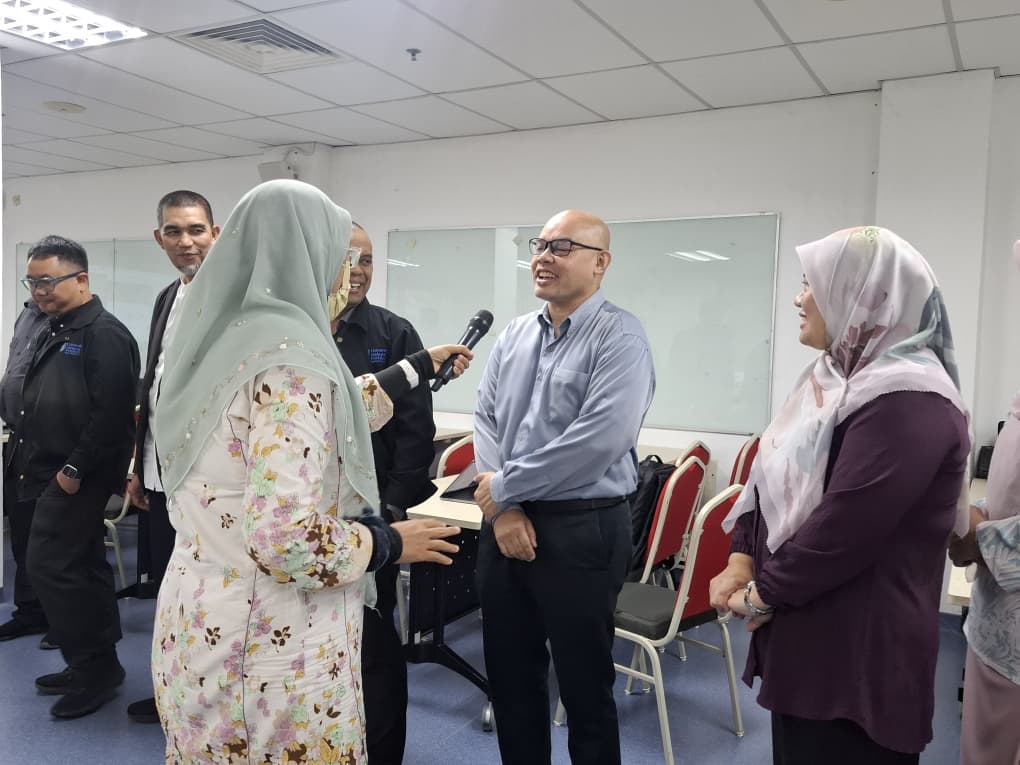
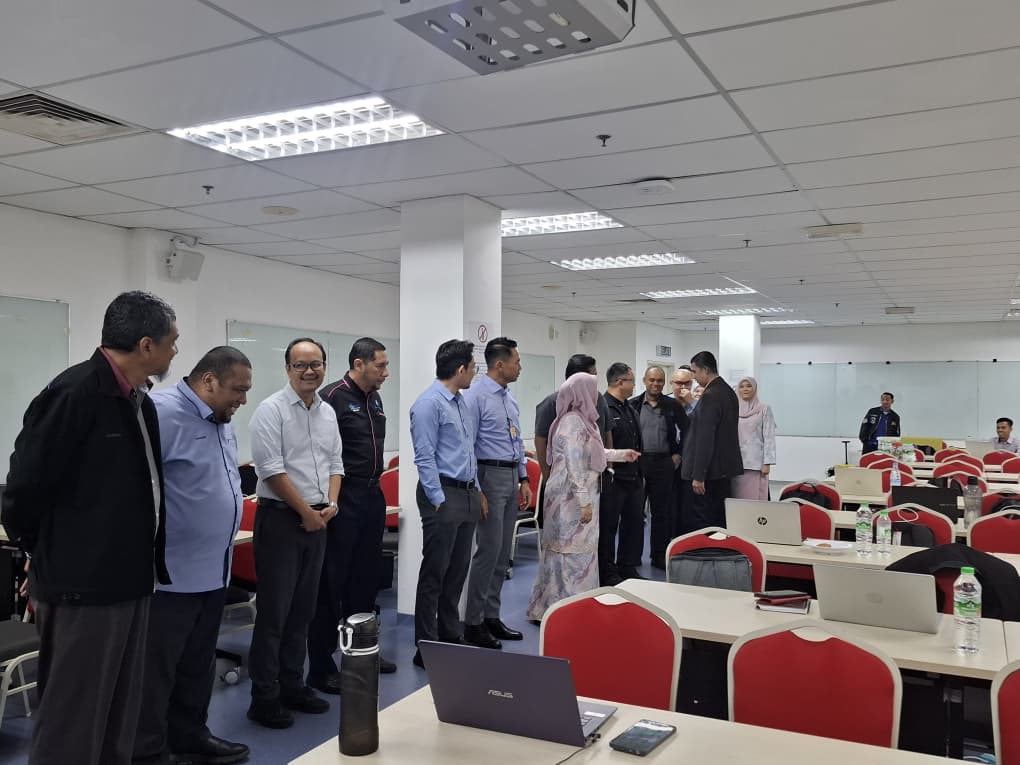
Today, I had the privilege of serving as an evaluator for a program organised by Persatuan Guru Besar Malaysia, Cawangan Pekan, focusing on Best Digital Practices in School. A total of 12 dedicated presenters showcased their digital initiatives, demonstrating how technology is being meaningfully integrated into PdP as well as school management and operations.
The evaluation covered several components, including:
Quality of presentation
Effectiveness of the digital intervention
Creativity and innovation
Improvement and impact
Expansion potential and sustainability
Way forward and future plans
The teachers truly impressed me with their creativity, passion, and commitment to enhancing their digital practices. Their work reflects not only technical skill, but also a deep desire to improve students’ learning experiences and strengthen school governance through technology.
Thank you GB Tuan Mohd Zaki, Pekan District Education Office and Persatuan GB Pekan for this initiative. I am honored to have been part of this meaningful programme. It provided a valuable platform to learn, share, inspire, and be inspired by the incredible work happening in our schools.
Looking forward to collaborating in more initiatives like this and continuing to support our educators as they lead the way in digital transformation.


Organised by Bahagian Pembangunan Bakat, UMPSA
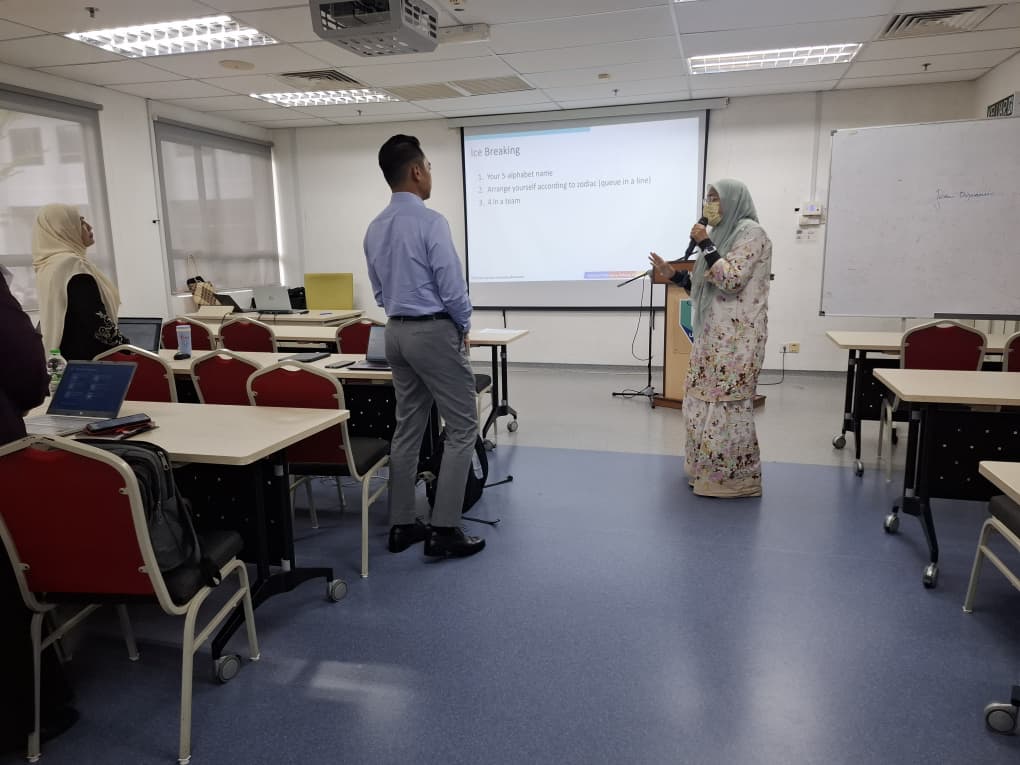
Delivered a full-day workshop titled “Strategic Negotiation for Effective Results Leadership”, today at UMPSA. Organised by the Bahagian Pembangunan Bakat, Human Resources UMPSA, as part of their mission to cultivate strong, future-ready leaders within the university ecosystem.
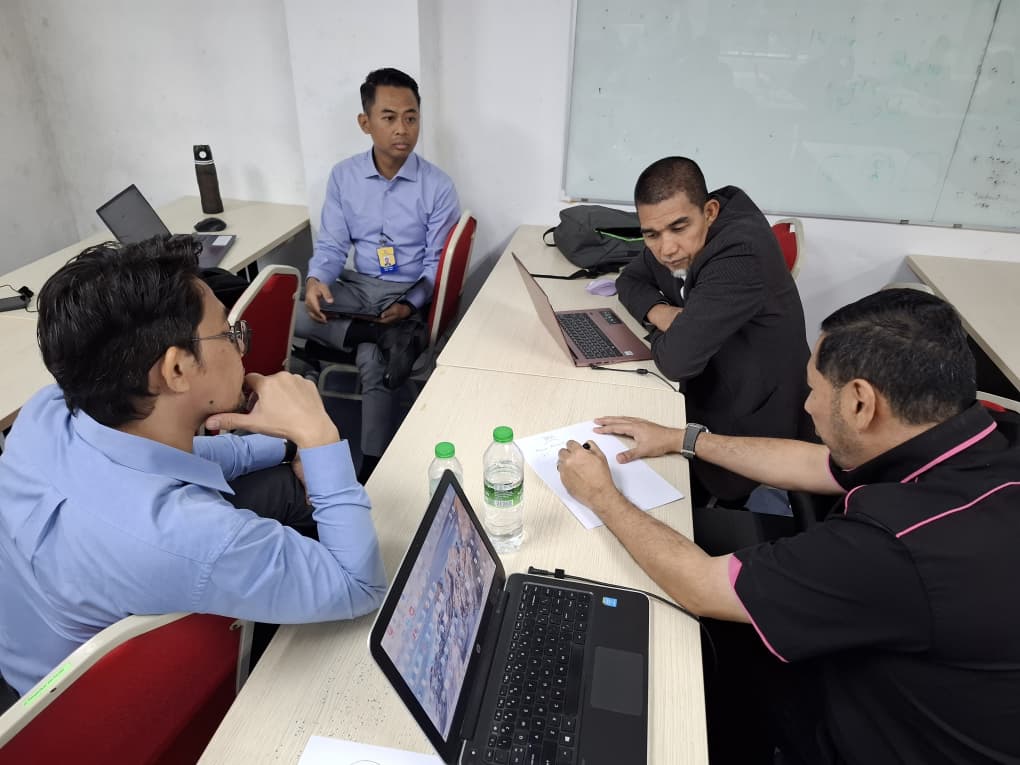
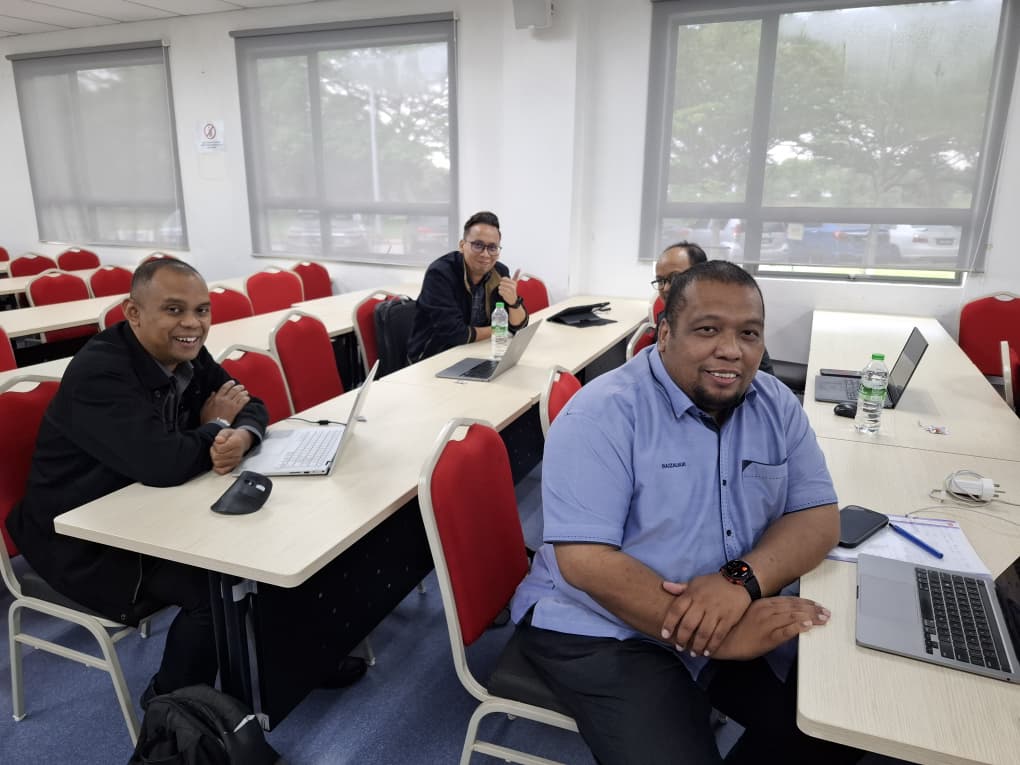
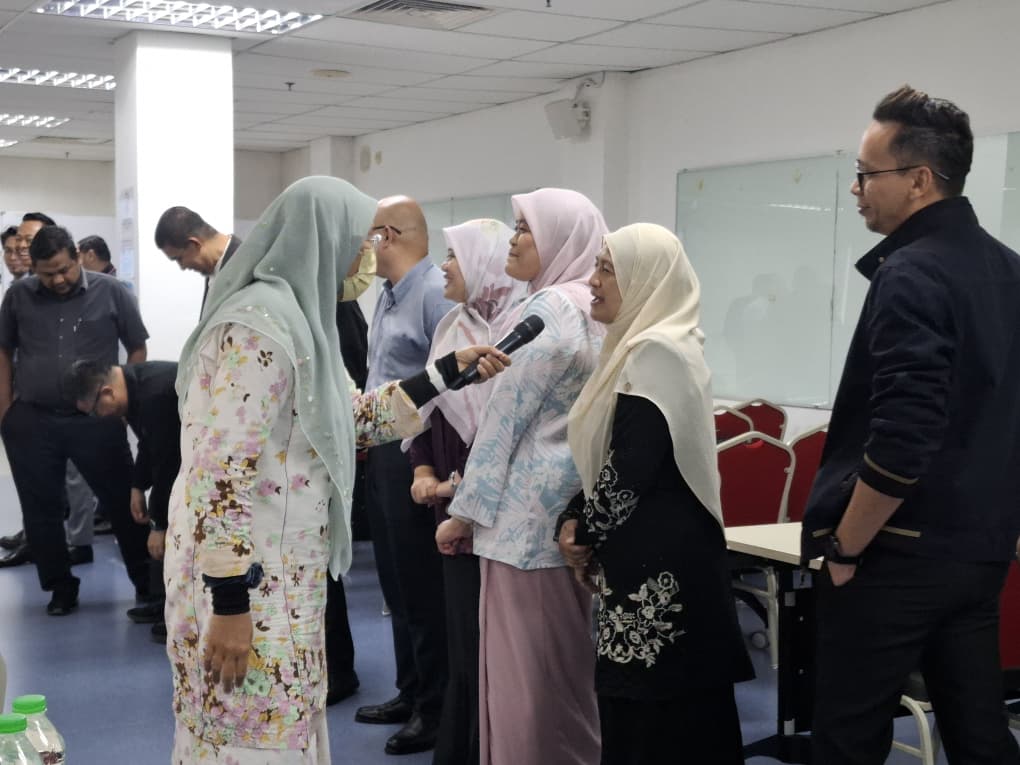
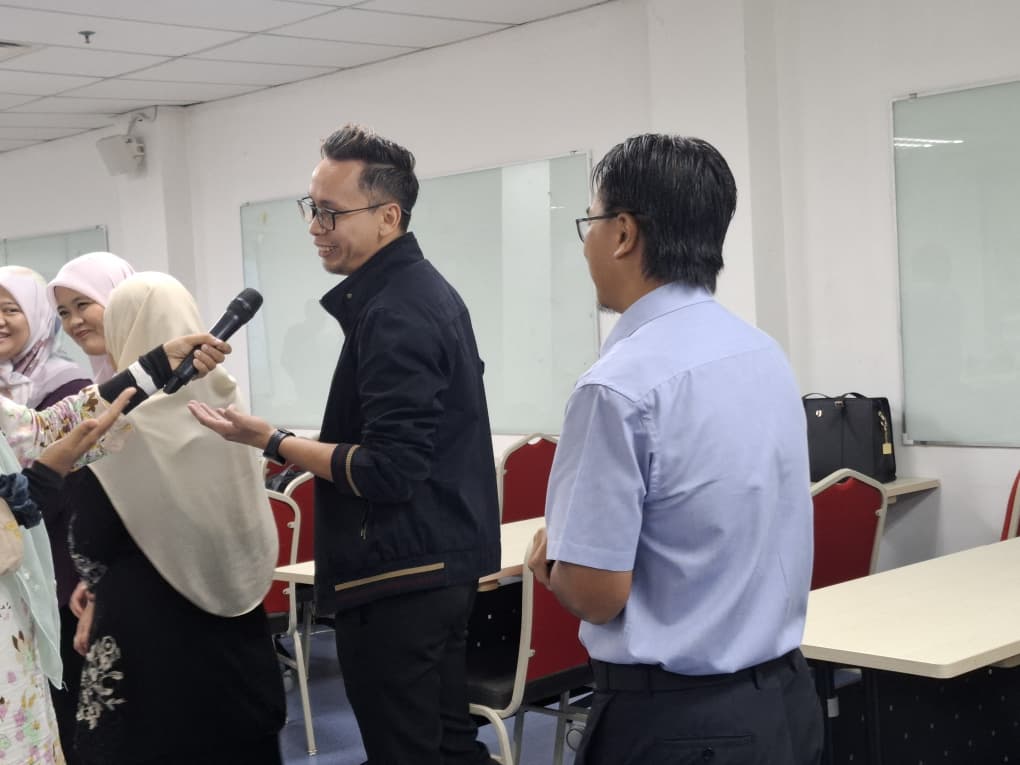
The session brought together 20 UMPSA staff, including lecturers, unit heads, and directors, each bringing their own leadership experiences, challenges, and negotiation stories. This results in a session filled with insightful discussions, deep reflections, lively role-plays, and surprisingly creative solutions.
Negotiation is not just as a skill, but a core leadership competency for academia, where alignment, collaboration, and resource optimisation are daily realities.
We explored and practiced:
1. Foundations of Strategic Negotiation
Negotiation vs. persuasion vs. conflict resolution
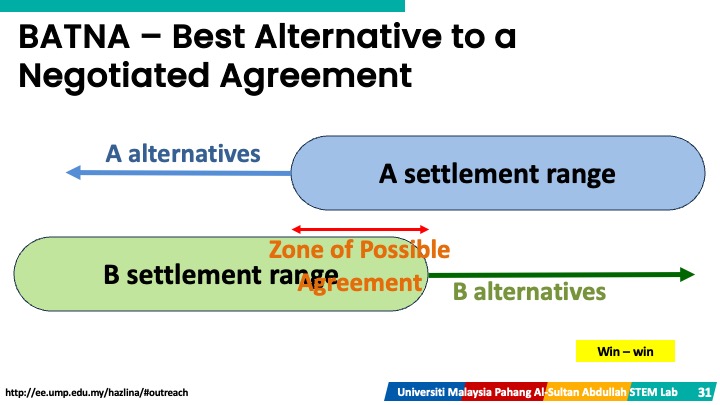
Understanding BATNA, ZOPA, and Interests vs. Positions
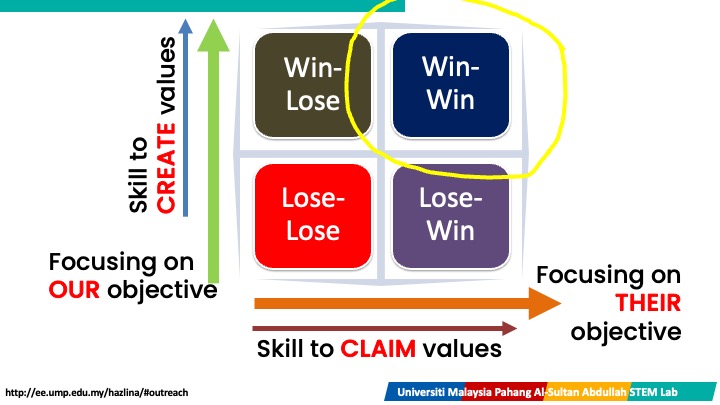
Cultivating win–win value through goal setting, questioning, trust-building, and solution-finding
Discussions on real UMPSA scenarios involving scheduling, student issues, and inter-faculty coordination
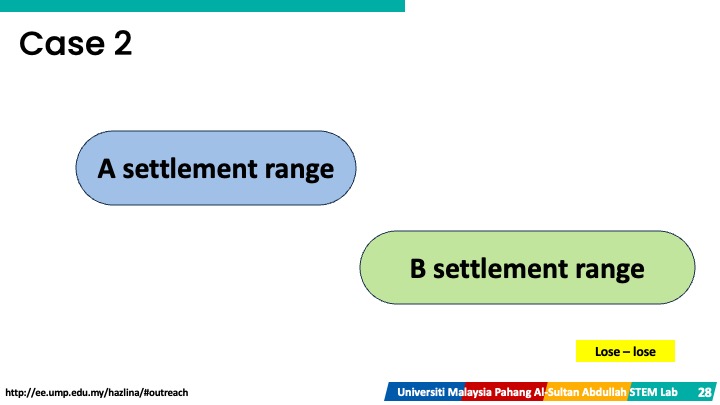
Participants reflected on their own negotiation experiences—many eye-opening moments were shared, including challenges in securing resources, addressing workload distribution, and managing expectations across units.
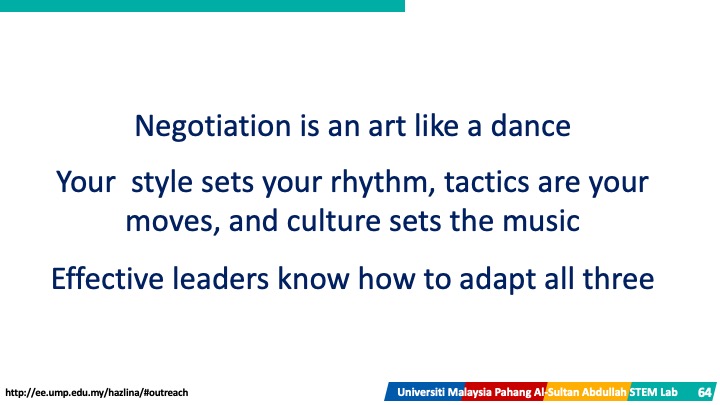
2. Negotiation Styles, Tactics & Cultural Dimensions
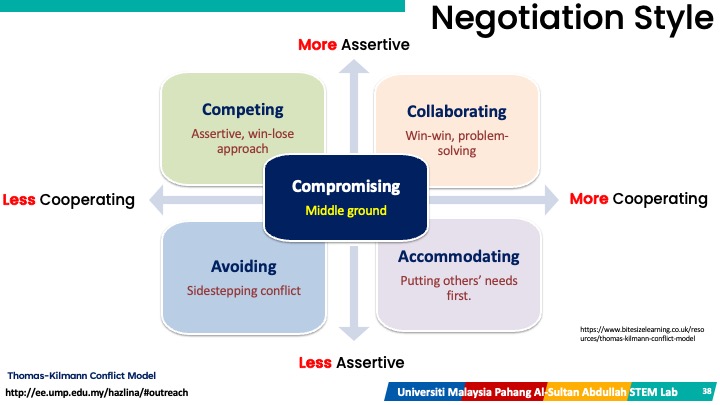
Participants assessed their own negotiation styles (Competing, Collaborating, Compromising, Avoiding, Accommodating) and were surprised at how accurately the profiles reflected their everyday behaviour.
We explored four core tactics:
Anchoring – how first offers shape outcomes
Framing – how perspective determines acceptance
Concessions – strategic give-and-take
Reciprocity – the principle of “I give, you give”
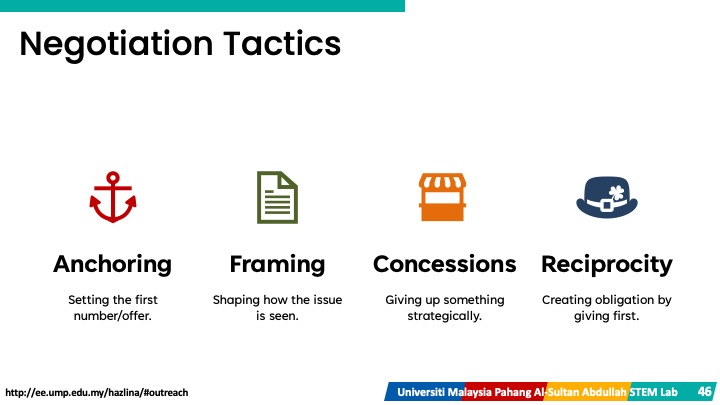
Discussions became especially lively when participants applied these concepts to current topics such as Malaysia–US academic agreements, SKU allocations, staffing, and faculty collaborations.
3. Practical Negotiation Scenarios
The highlight of the day was the group simulations.
Participants negotiated across three case studies involving:
Faculty resource allocation
Budget approval between departments
International research collaboration (MoU)
The negotiating tables became energetic zones of persuasion, power dynamics, alliance building, and clever concessions. Observers used structured evaluation templates to assess tactics and highlight real-time negotiation behaviour.
4. Advanced Strategies & Personal Action Plans
In the final segment, we explored:
Multi-party negotiation challenges
Power & Influence Mapping
Emotional intelligence for negotiation success
Drafting a personal negotiation strategy to use immediately in UMPSA contexts
Participants concluded with three personalised strategies they will apply in upcoming meetings, discussions, and collaborations.
The energy throughout the day was exceptional. Thank you =)
Participants openly exchanged experiences, challenged ideas, and engaged in intellectual debates around:
Faculty KPIs
Cross-border collaborations
Research funding
Academic politics
Institutional alignment
Everyone contributed—and everyone learned from one another.
This was not just a training, but a shared learning journey.
Negotiation lies at the heart of academic leadership.
Whether it’s securing resources, aligning stakeholders, or building collaborations, UMPSA’s leaders now carry a stronger toolkit to navigate these challenges.
A heartfelt thank you to Bahagian Pembangunan Bakat UMPSA for organizing this impactful program—and to all 20 participants for their commitment, openness, and enthusiasm.
Together, we’re shaping a more collaborative, strategic, and empowered UMPSA.