Modules for programming and robotics.
The world is digital, but life is analog..
Modules for programming and robotics.


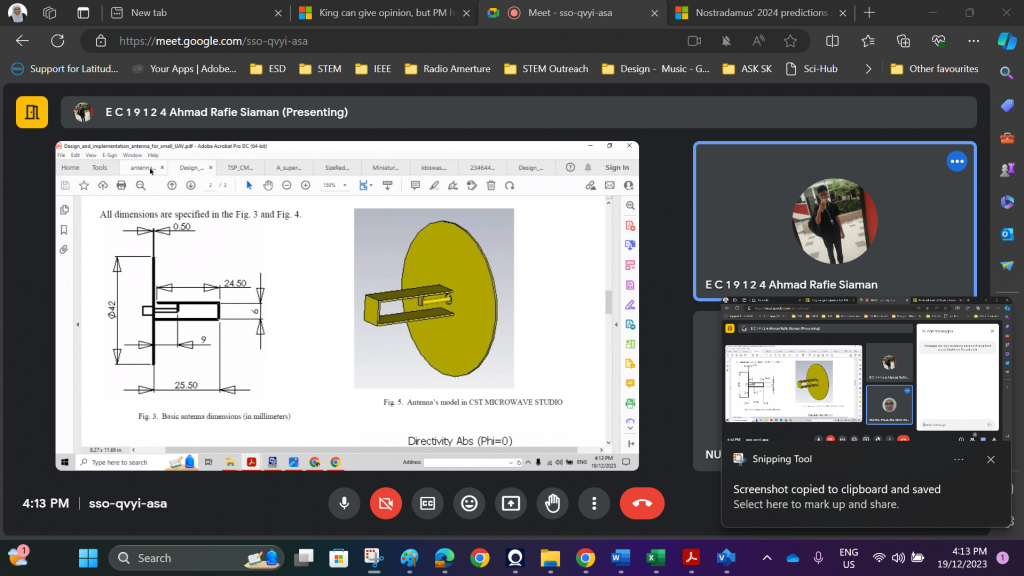


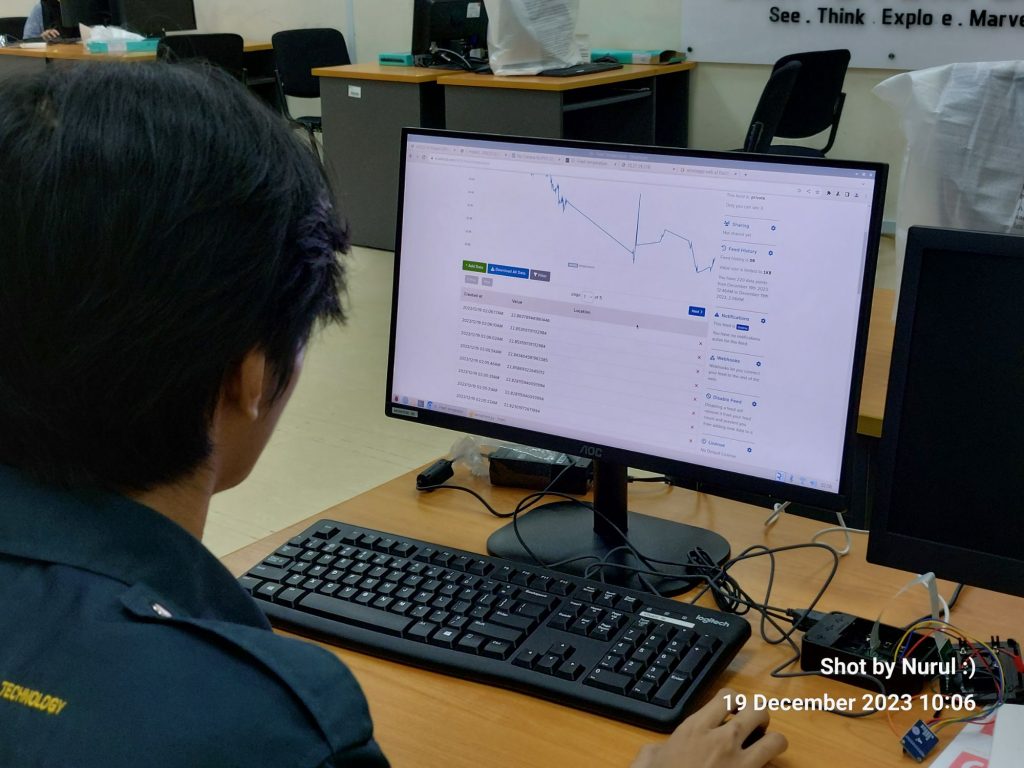
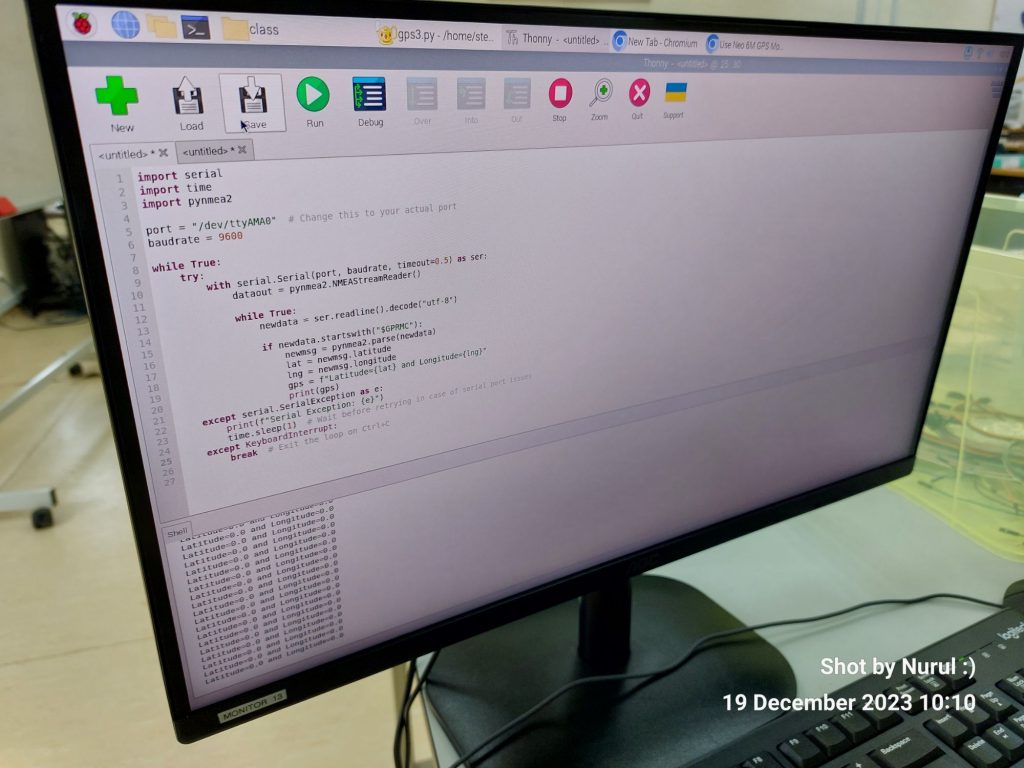
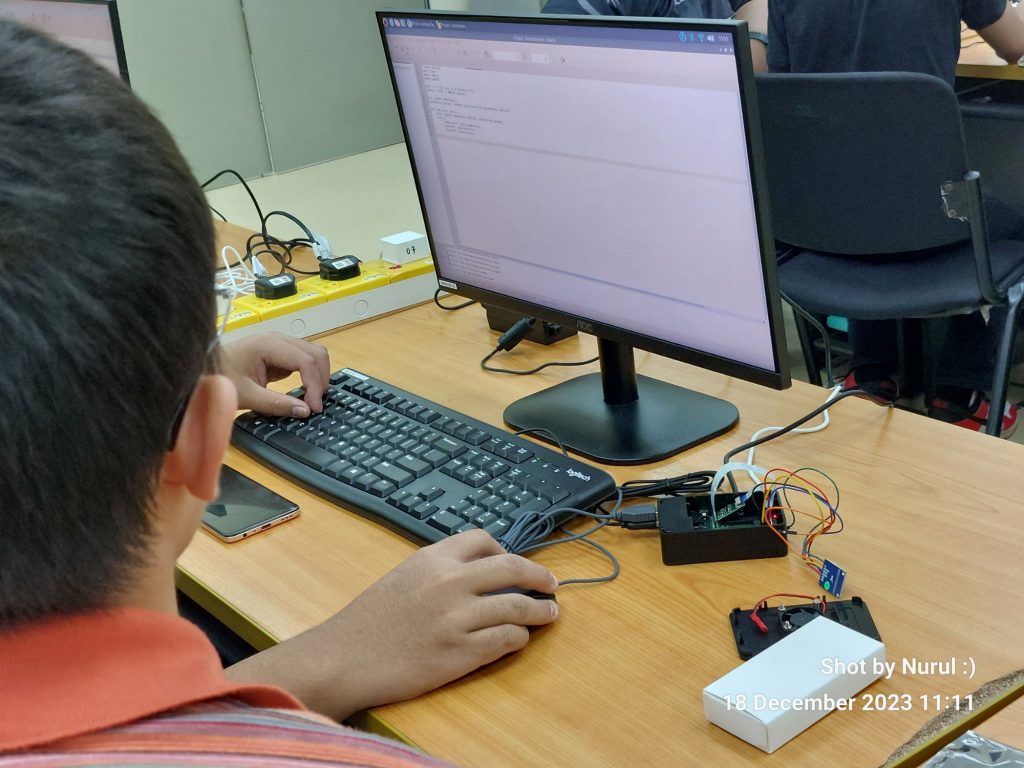

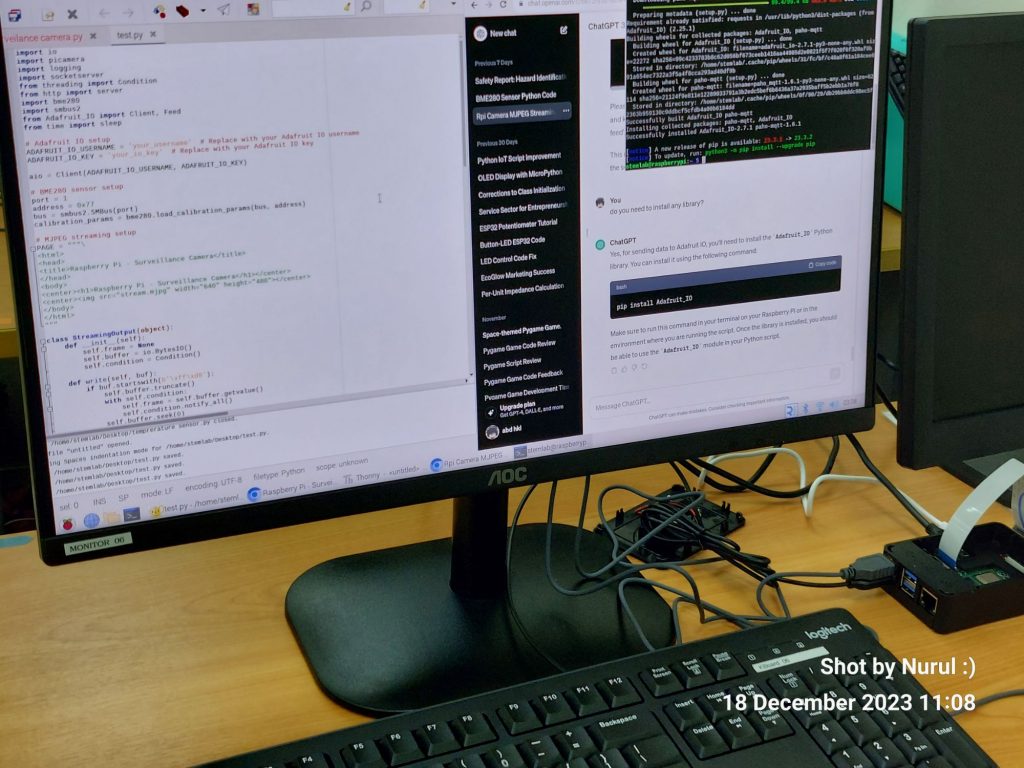
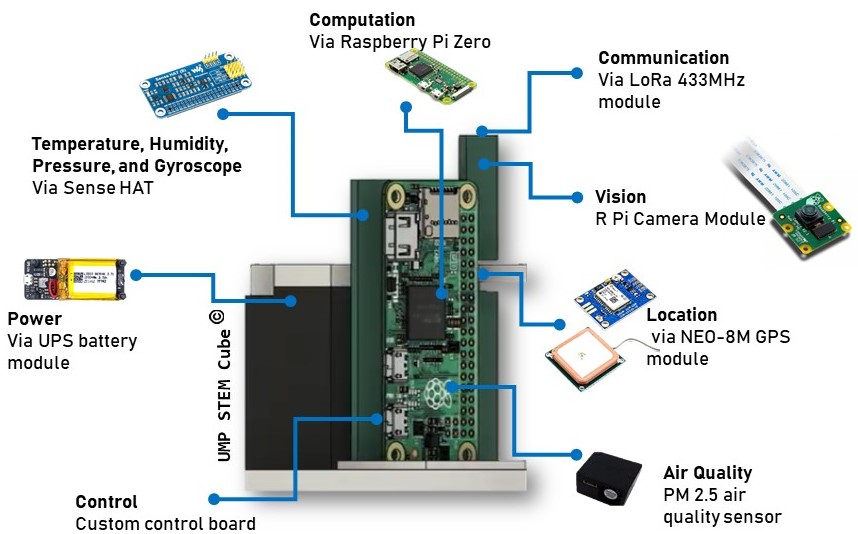
Are you ready to delve into the exciting world of Internet of Things (IoT) with Raspberry Pi?
Join us for an immersive course where we will harness the potential of UMP STEM Cube as our platform, utilizing the Raspberry 3 / Pi Zero and MicroPython to embark on a journey of innovation and discovery!
In this course, you will:
This course is perfect for:
Join us on this exciting journey as we unlock the potential of Raspberry Pi IoT using UMP STEM Cube. Get ready to unleash your creativity and make your mark in the world of digital innovation!
Dear DRE-ian,
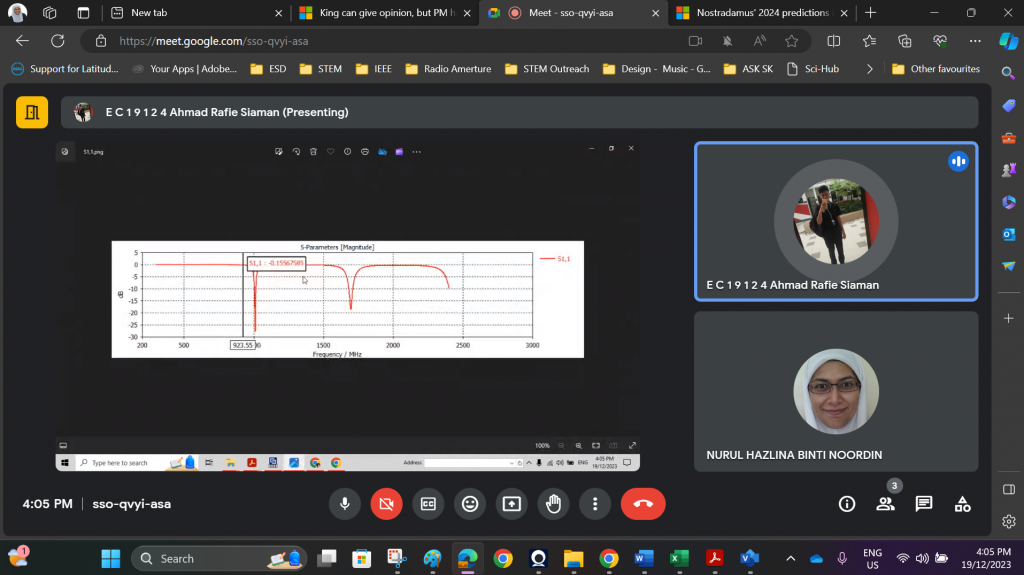
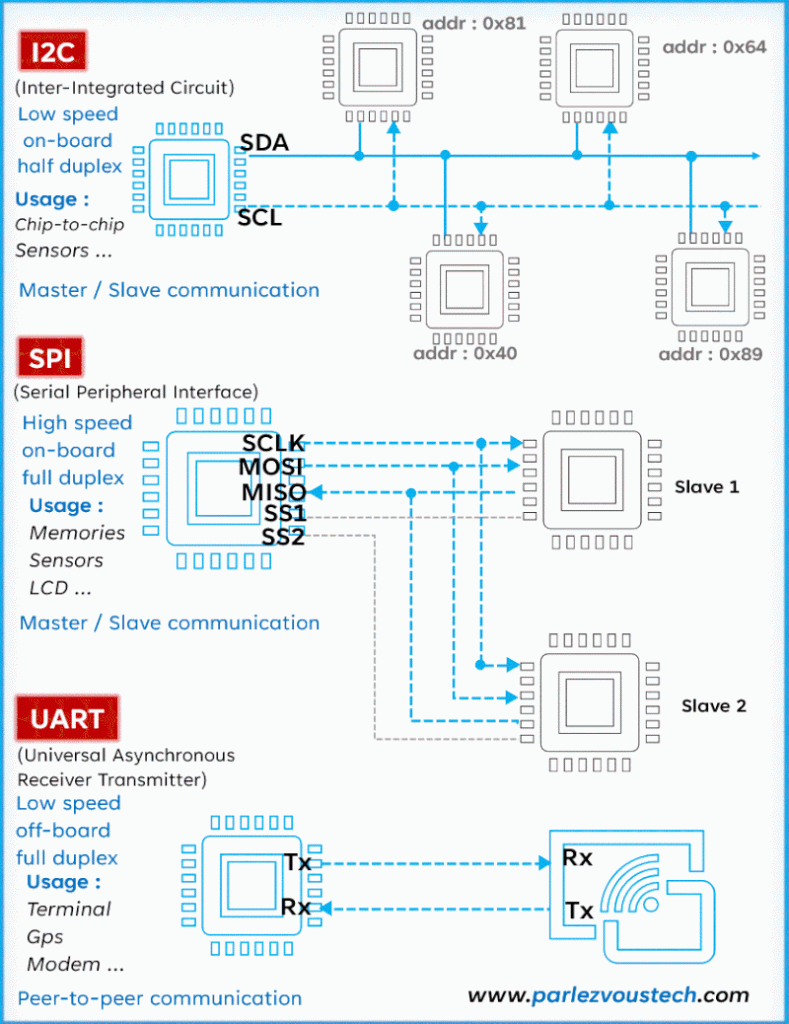
Let’s delve into the communication protocols – specifically, I2C, SPI, and UART. Recall Activity 4 DRE 2312 – you’ve already dipped your toes into BME280 sensor – to read humidity, temperatures and pressure using Raspberry Pi.
Take a closer look at these protocols that make data exchange between devices a seamless experience.
In the world of electronics, devices must communicate with each other effectively. Think of communication protocols as the languages that allow different components to exchange information. Among these protocols, I2C, SPI, and UART stand out for their versatility and widespread use.
Recall Activity 4 in Part B RPi: Controlling Sensors with Raspberry Pi
Now, let’s bring theory into practice. Imagine a scenario where you want your Raspberry Pi to collect temperature data from an I2C temperature sensor, pressure data from an SPI pressure sensor, and transmit the combined information to another device using a UART connection. With the knowledge of these communication protocols, you can seamlessly integrate these sensors into your projects, opening doors to a world of possibilities.
Challenges and Solutions: Troubleshooting in the World of Protocols
As you embark on your programming journey, you may encounter challenges in working with these protocols. Fear not! From addressing address conflicts in I2C to handling clock synchronization in SPI, understanding the common pitfalls and their solutions is crucial for becoming a proficient engineer.
The Future of Communication Protocols: Beyond DRE 2213 🙂
As you progress in your studies, you’ll discover that the world of communication protocols is ever-evolving. New standards and technologies emerge, and the ability to adapt is key. Whether you’re designing embedded systems, IoT devices, or robotics, a solid understanding of communication protocols will be your guiding light.
In the context of electrical and electronics engineering, mastering communication protocols is akin to learning a universal language. I2C, SPI, and UART are the cornerstones of seamless data exchange, and as you continue your programming journey, these protocols will become invaluable tools in your arsenal. So, buckle up, as you explore the exciting world of I2C, SPI, and UART – the languages that bring your electronic creations to life!

Dear DRE-ian,
Congratulations on successfully completing Part B of our program! It’s evident that you’ve progressed beyond the novice stage, and what better way to mark this milestone than by embarking on a project. As you step into the next phase of your journey, we encourage you to choose a project topic from the provided list of five options. To express your interest and commitment, kindly register using the Google link shared earlier.
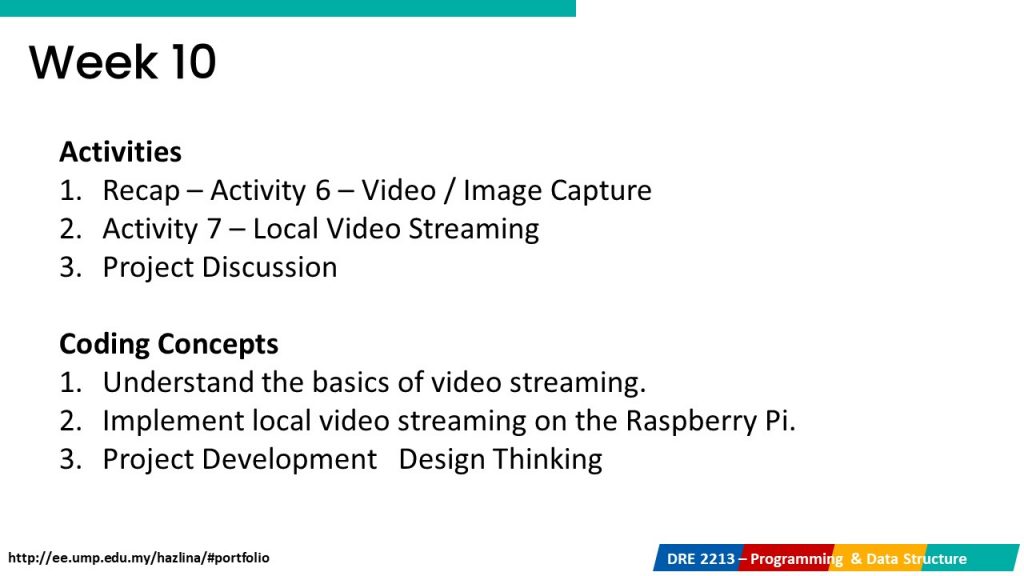
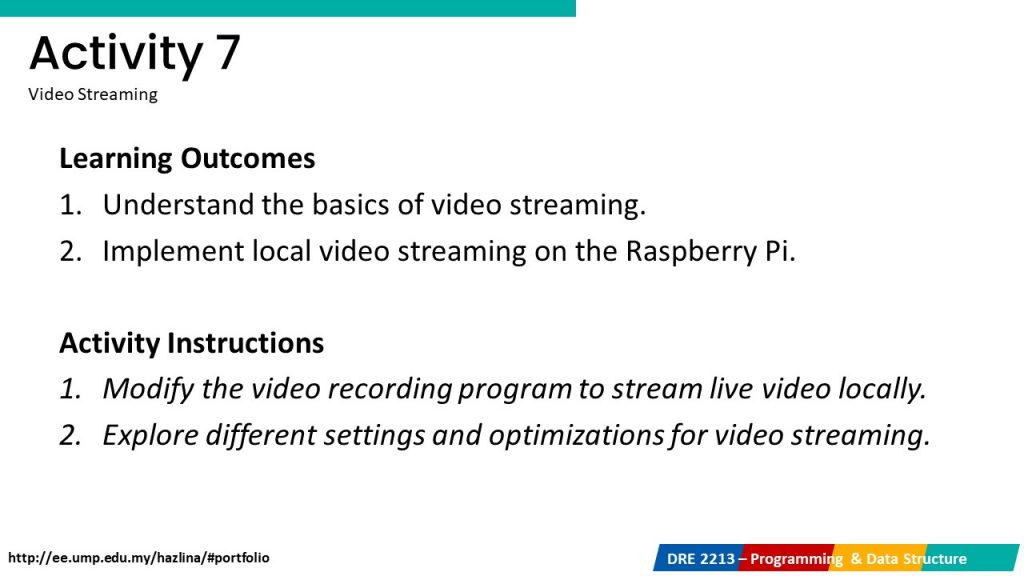
I encourage you to apply Design Thinking Strategies, which we discussed in class today, to shape and refine your project. The knowledge and skills you’ve acquired over the past 10 weeks serve as a solid foundation for you to actively contribute to the open-source community. Python, being a key focus, provides a fantastic starting point, and please explore additional techniques that can enhance and enrich your solution.
The deadline for project submissions is December 31st, and we have scheduled presentations for January 10th, 2024. This is a great opportunity for you to showcase your creativity, problem-solving abilities, and the application of your newfound knowledge.
I am excited to see what you will create 🙂 and how you will contribute to the open-source community.
Your project holds the potential to make a meaningful impact, and we look forward to witnessing your journey and success. Best of luck with your project development!


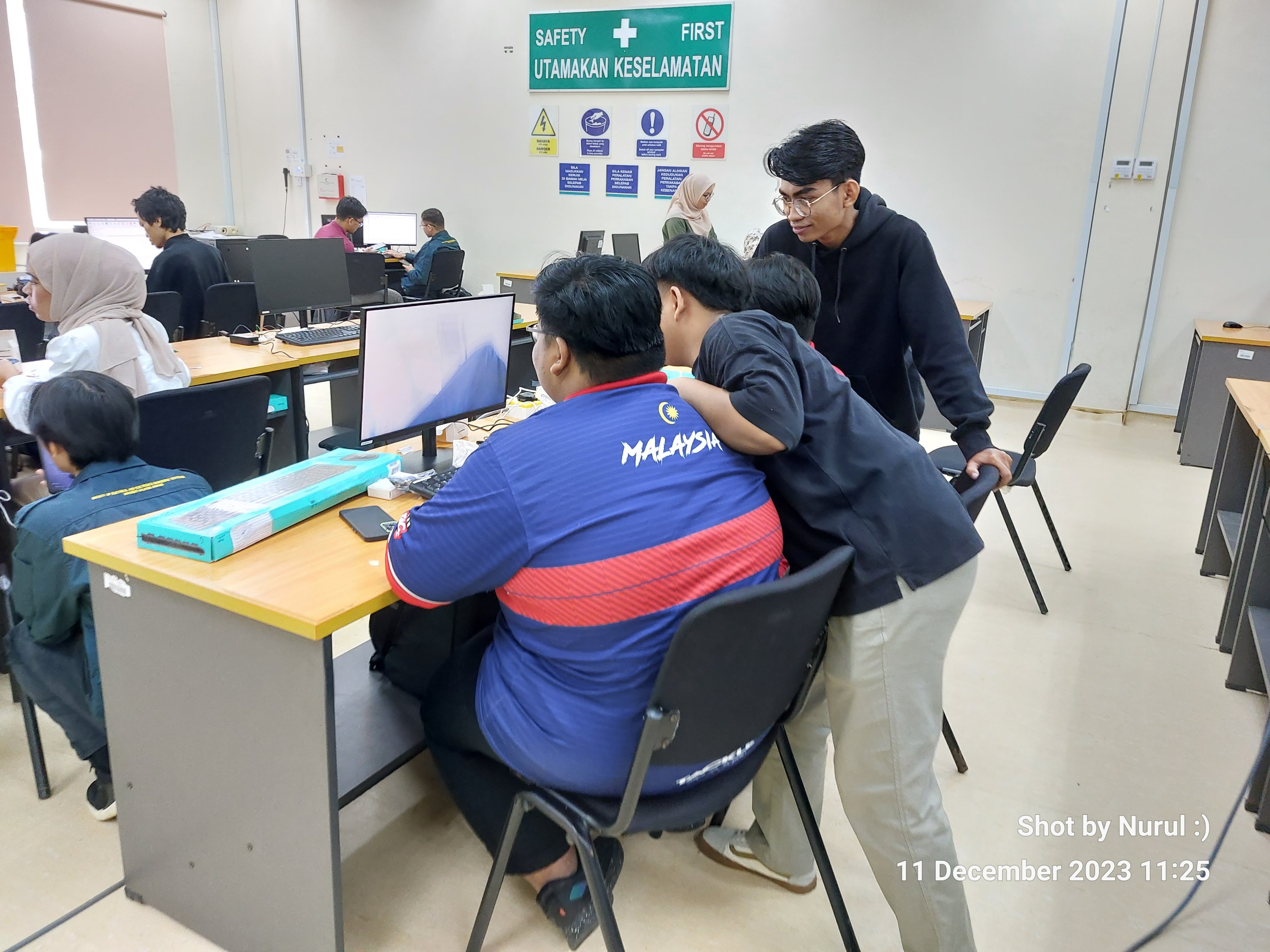
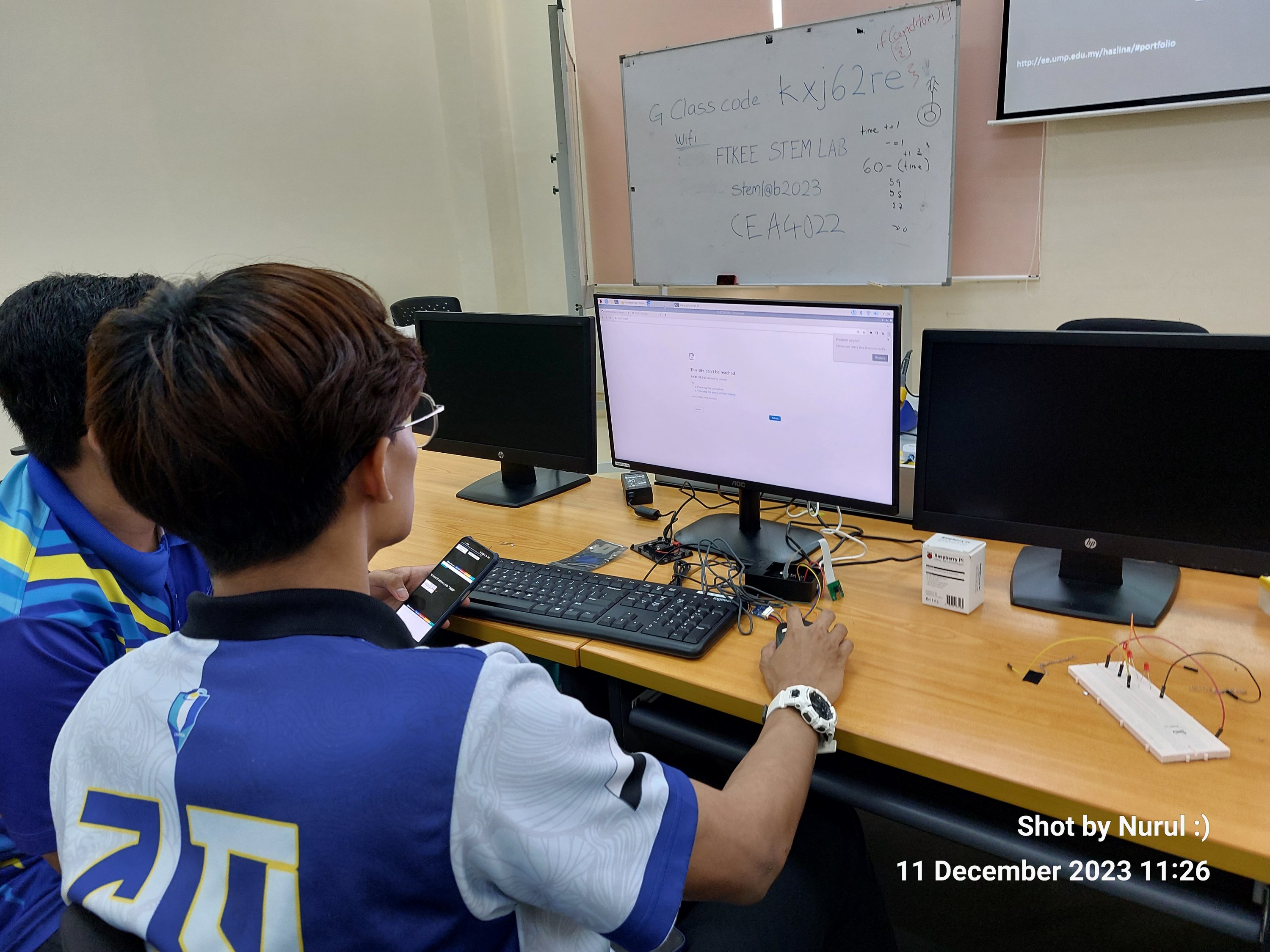
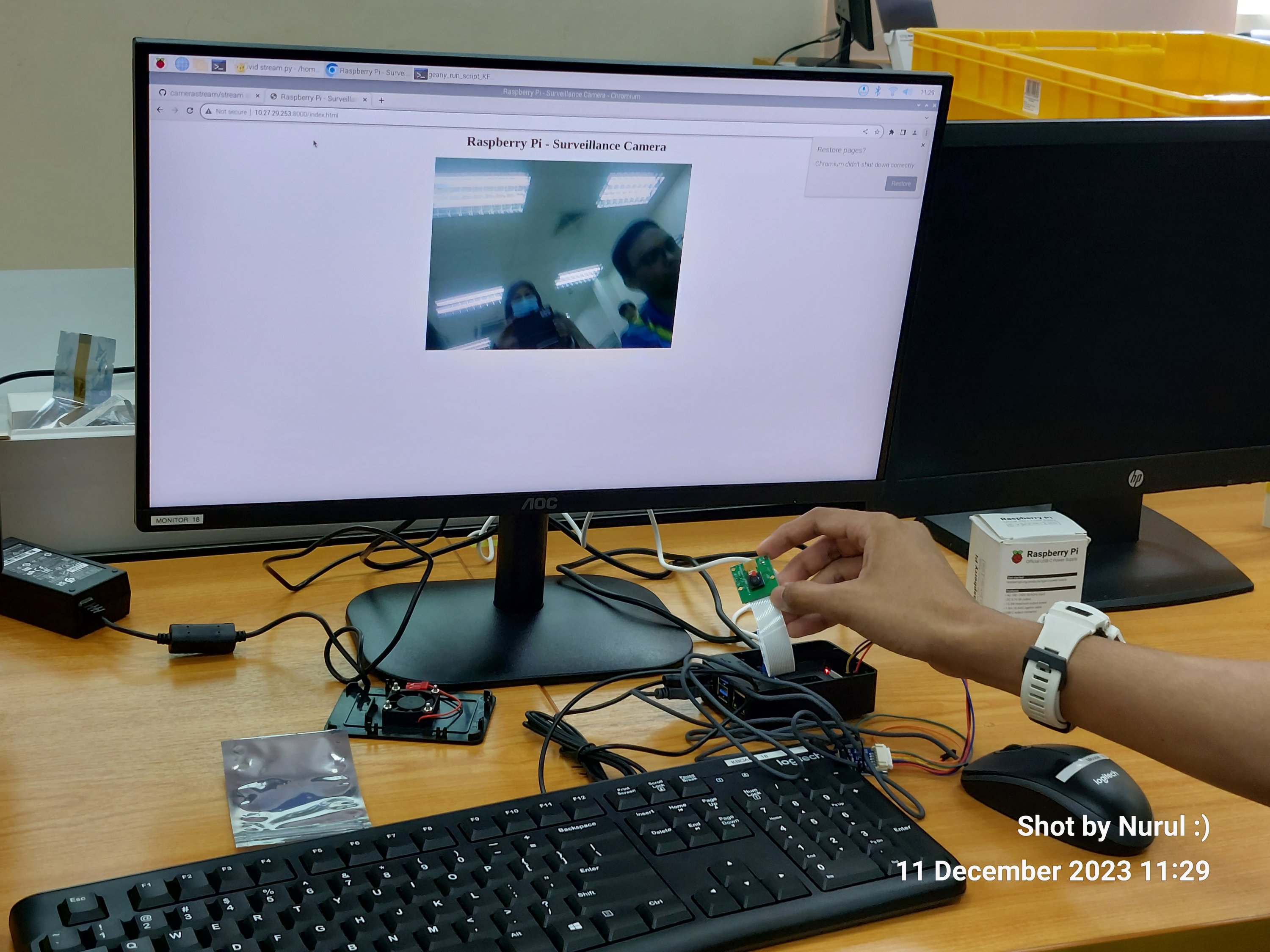
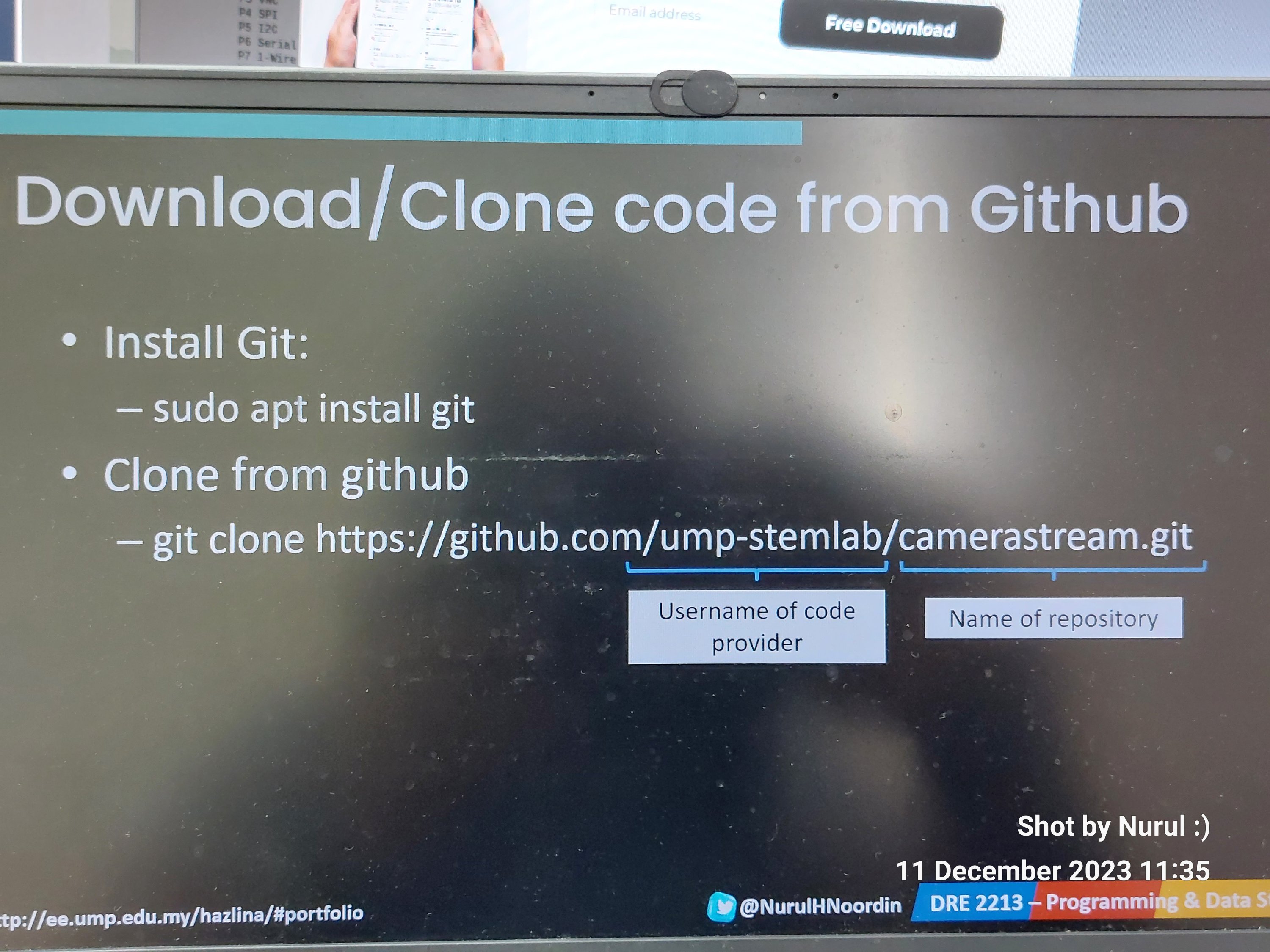


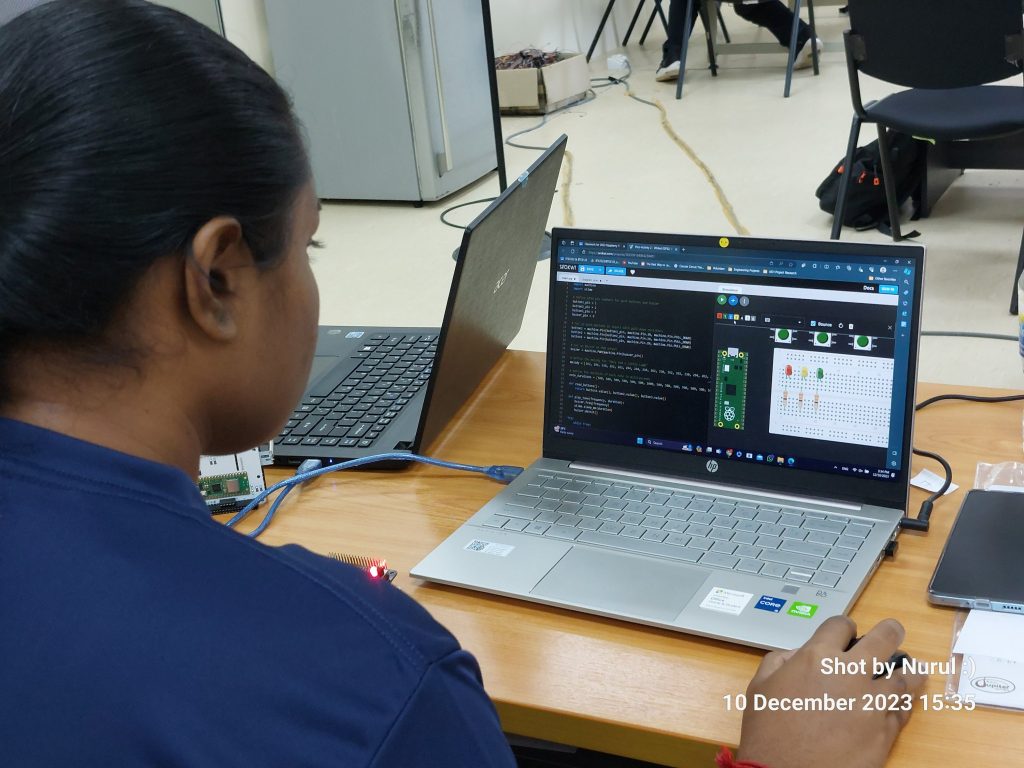
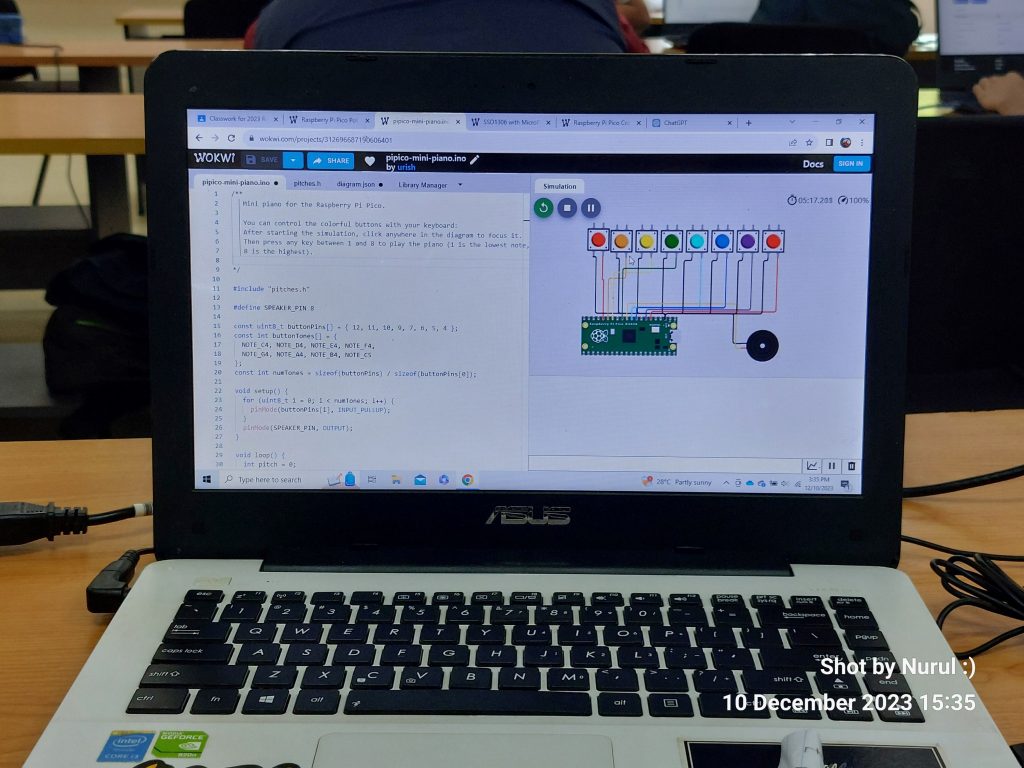
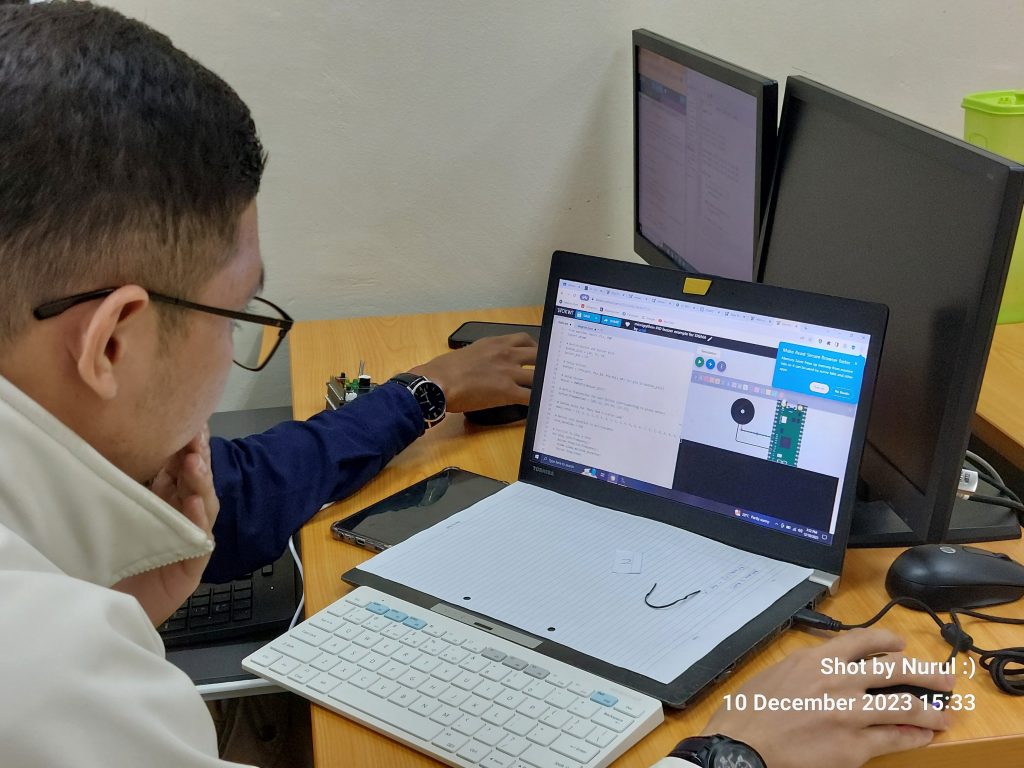
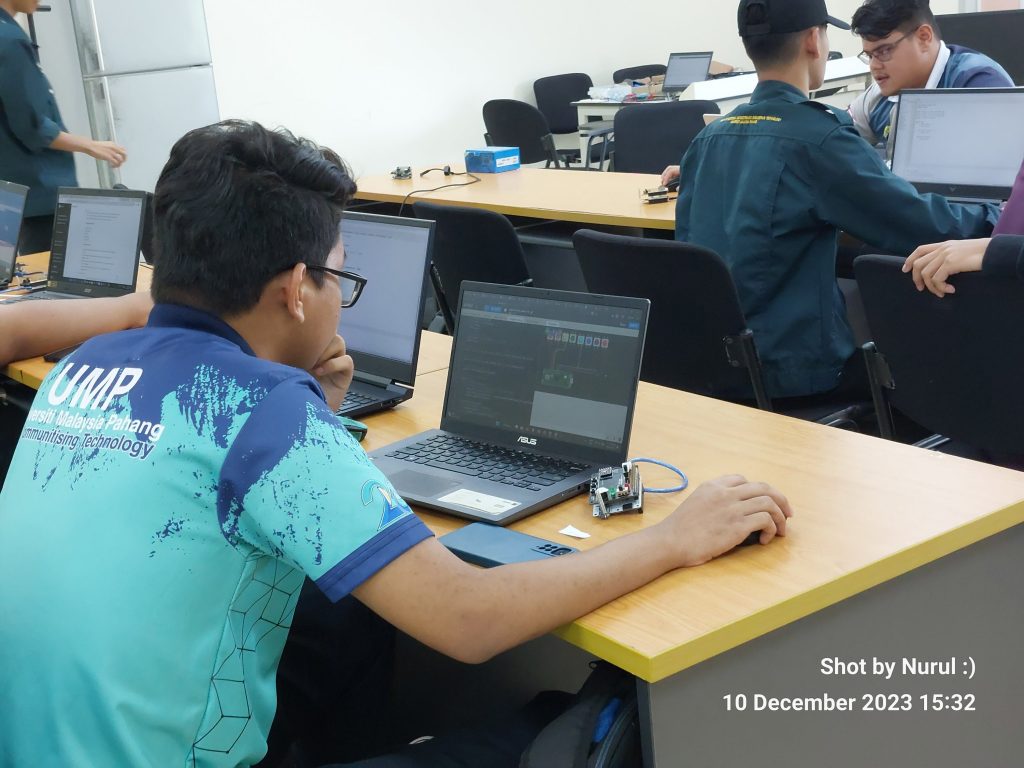

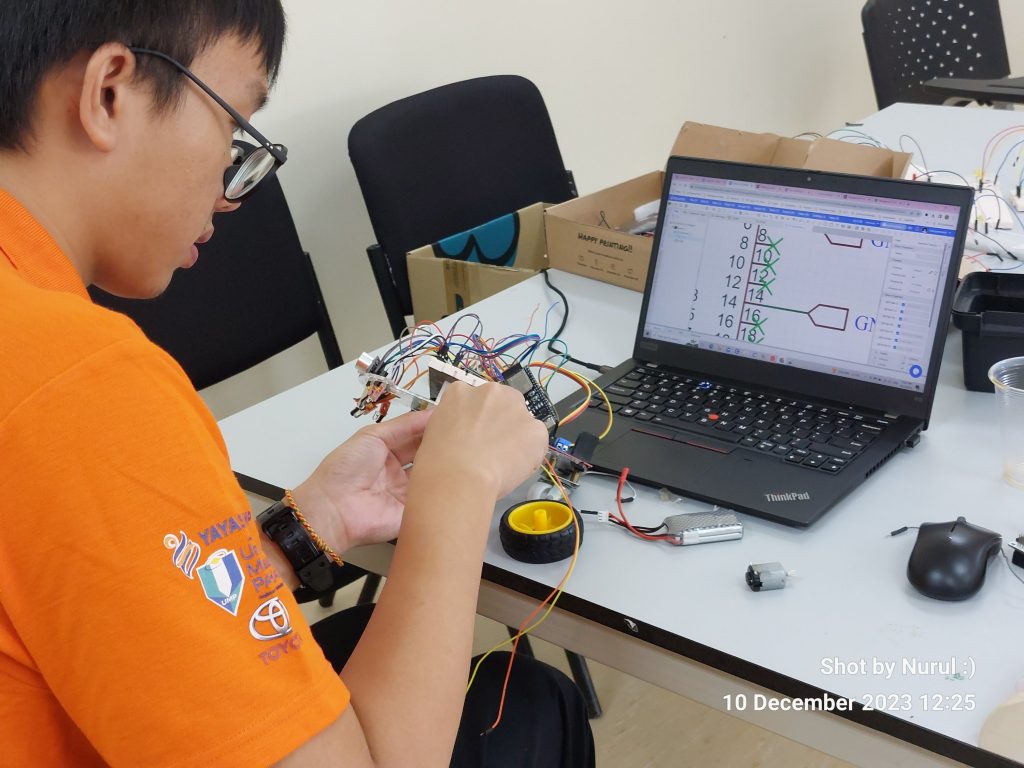
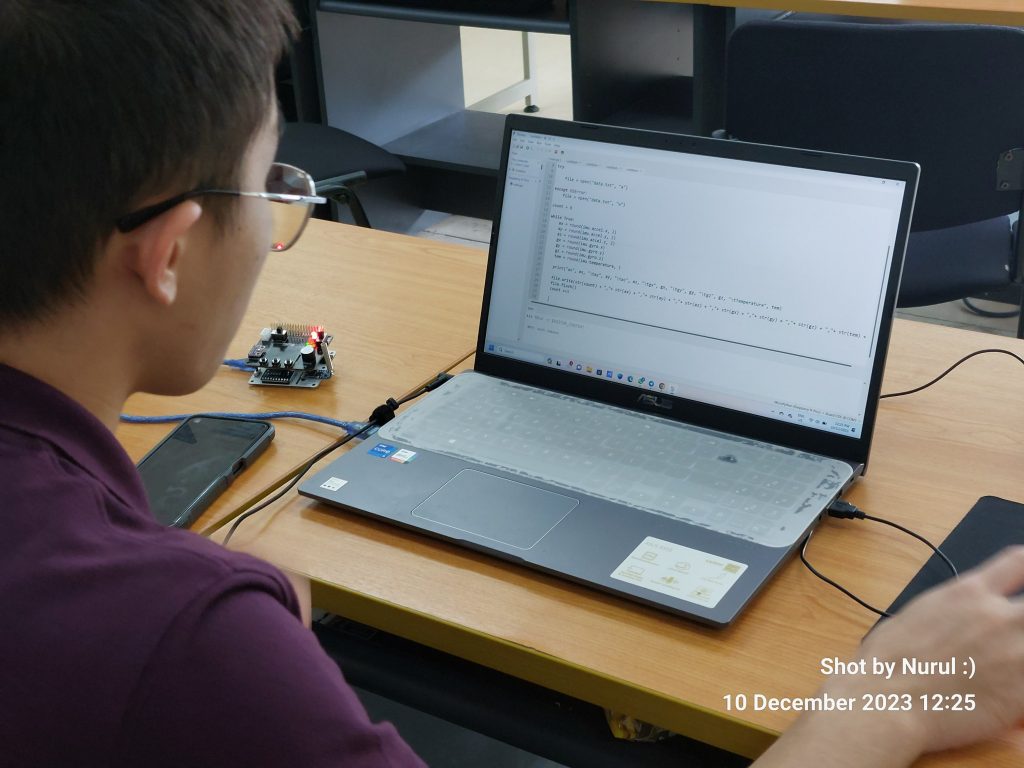
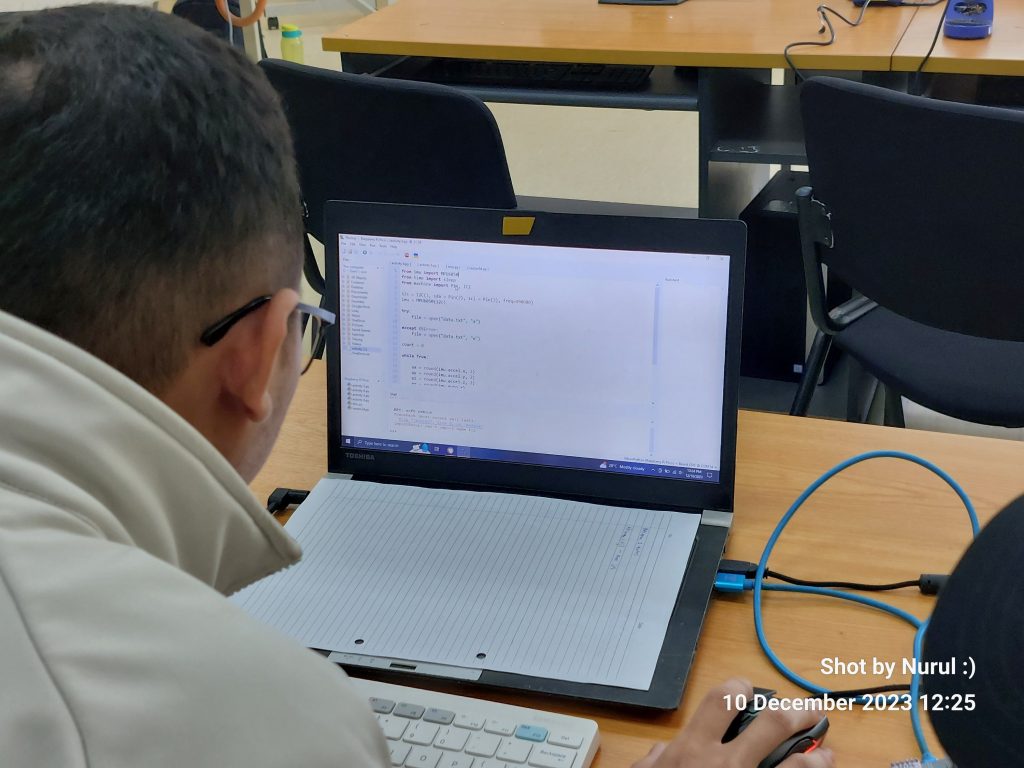
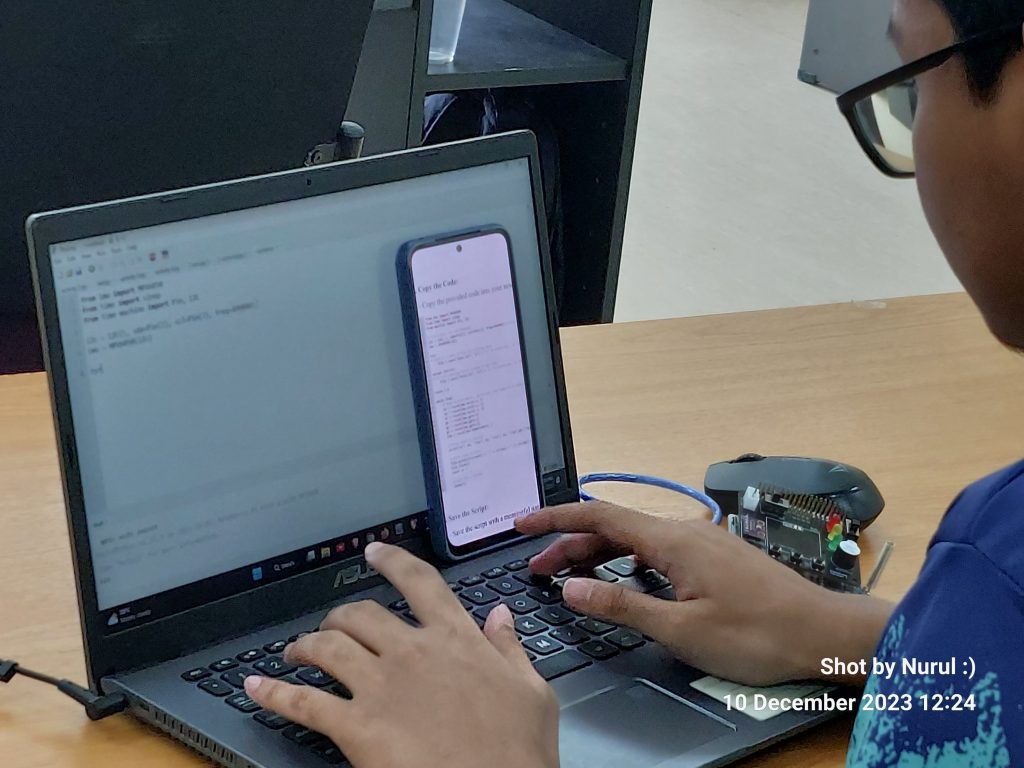

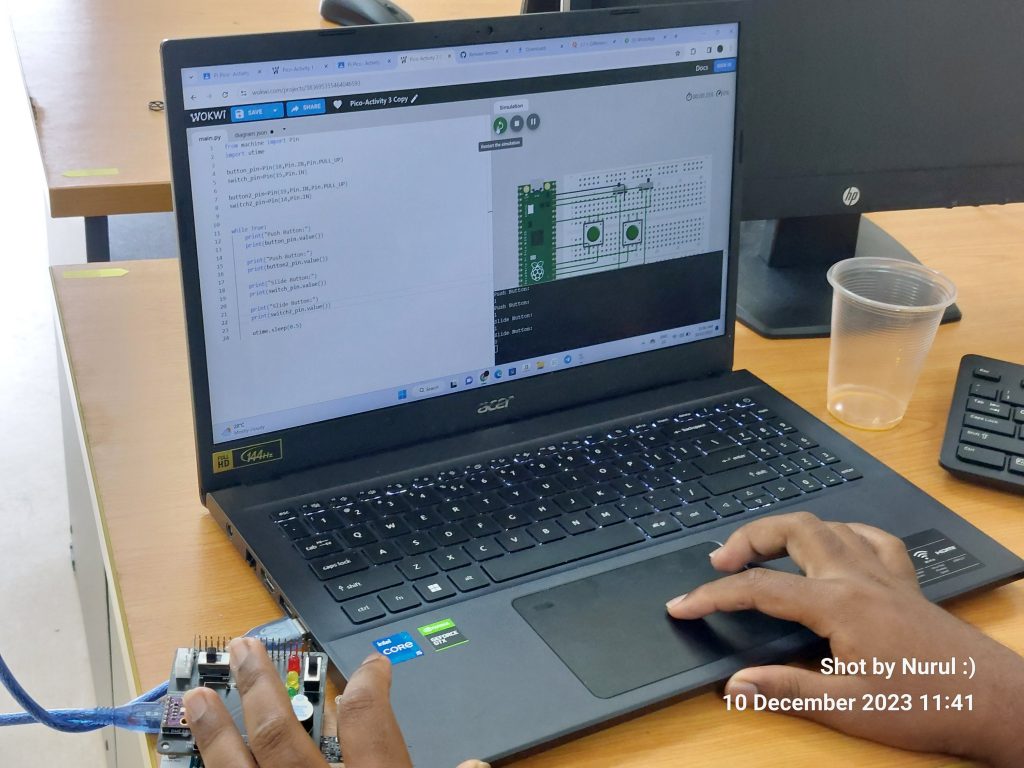
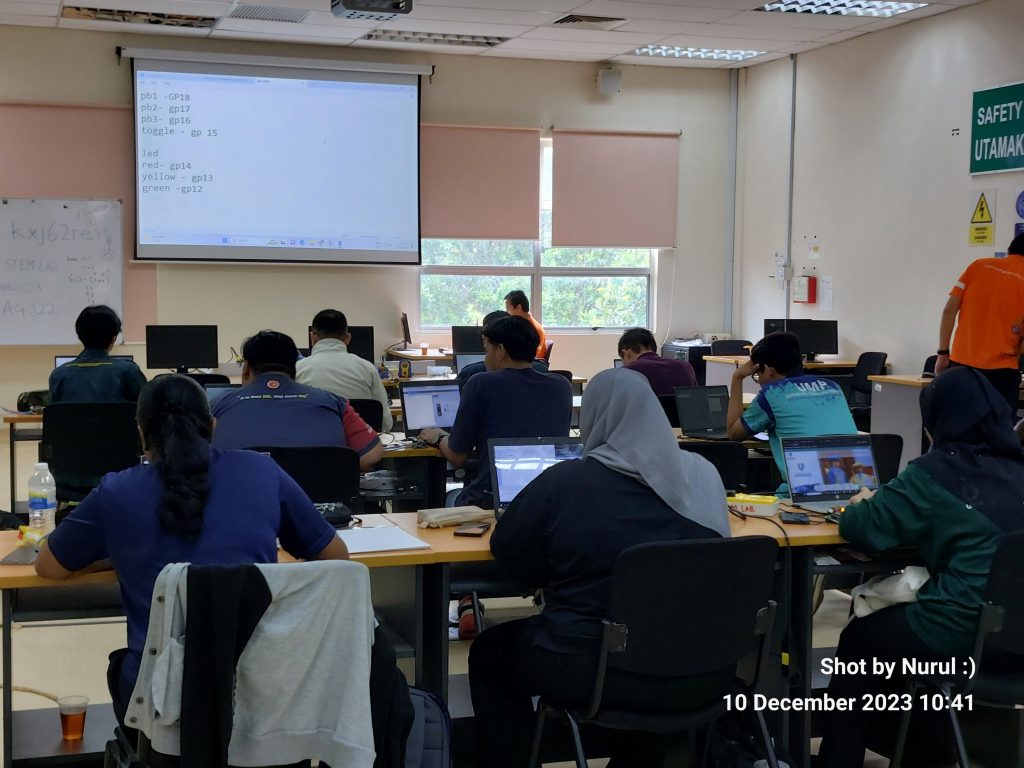
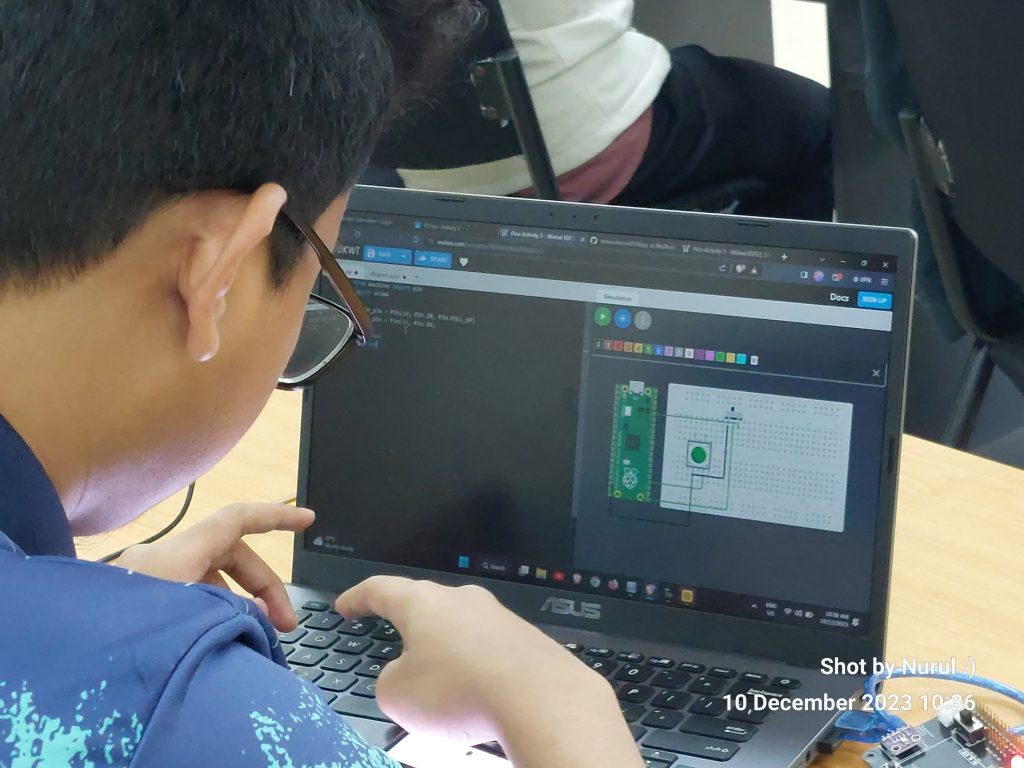
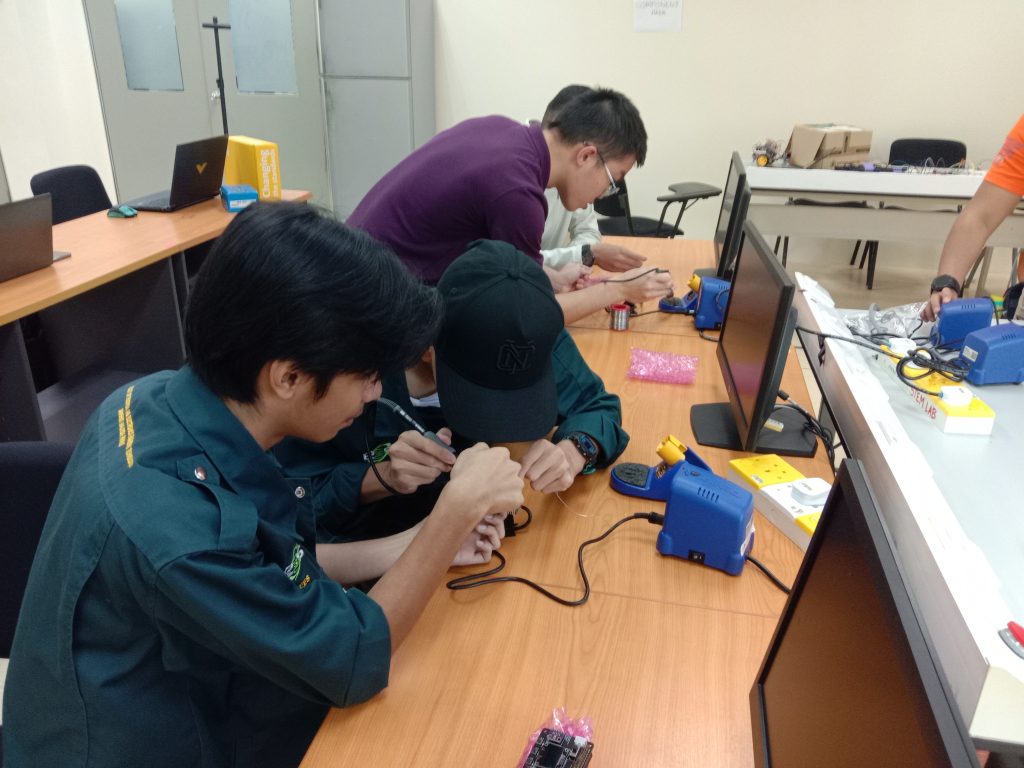
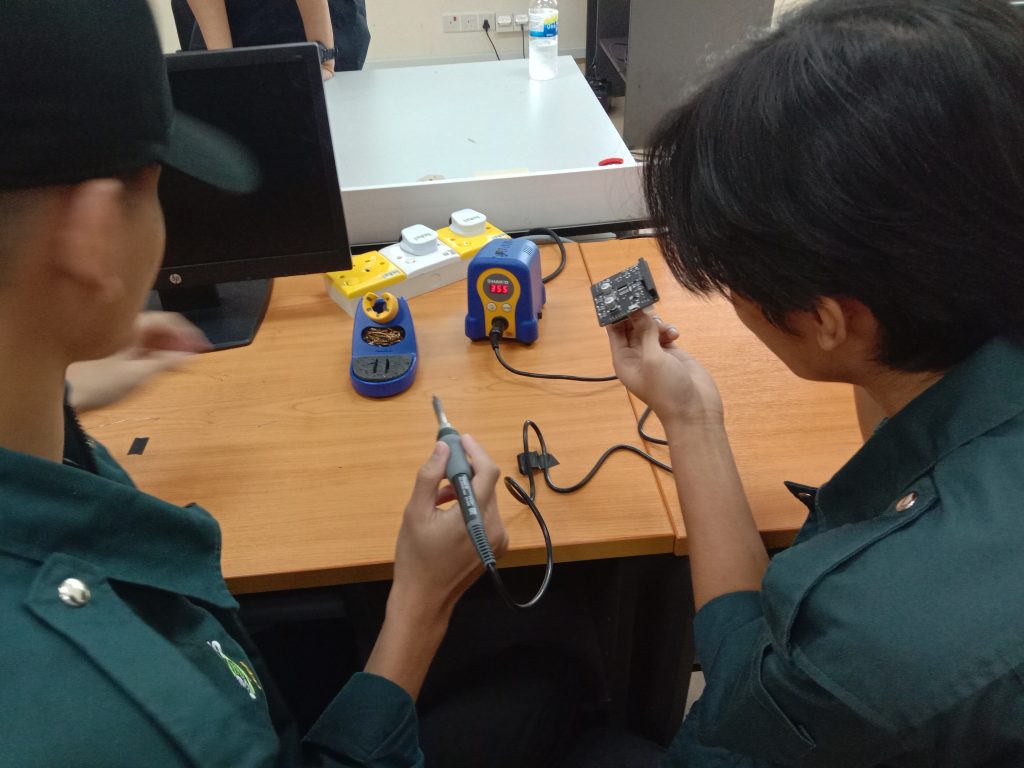

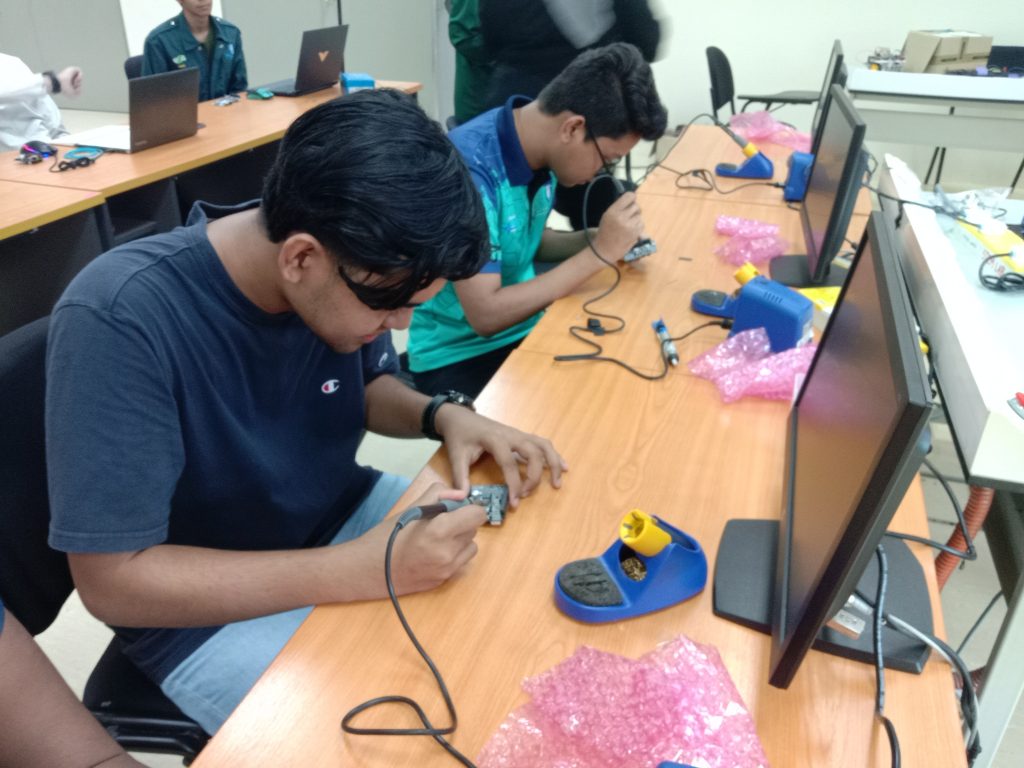
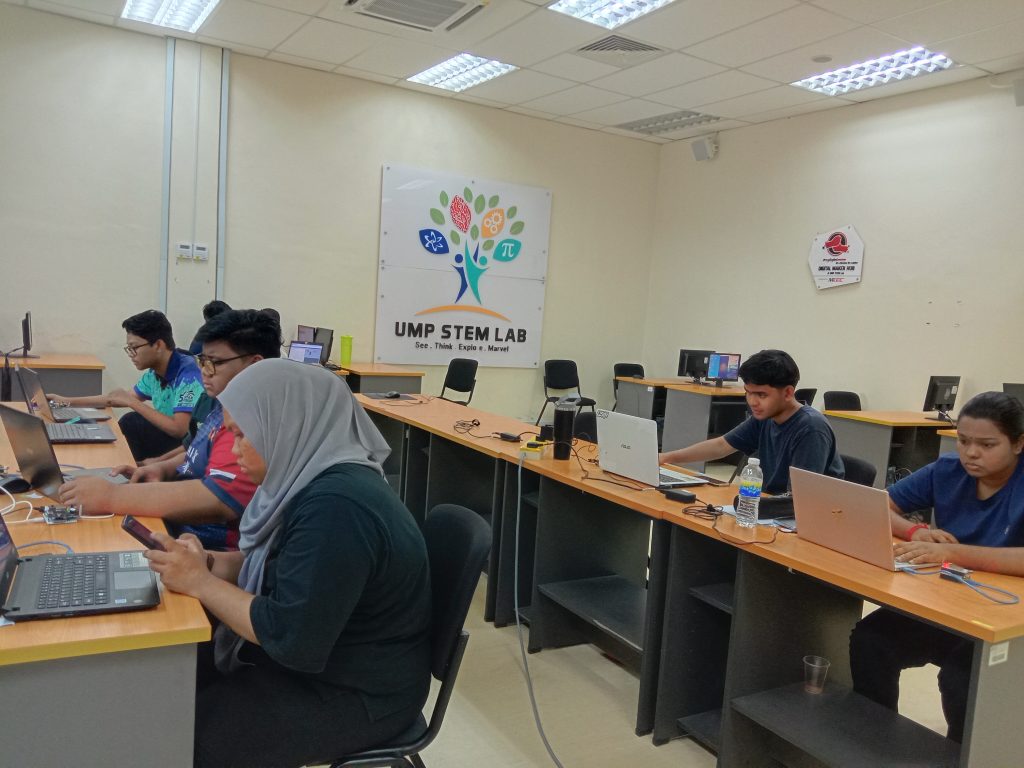
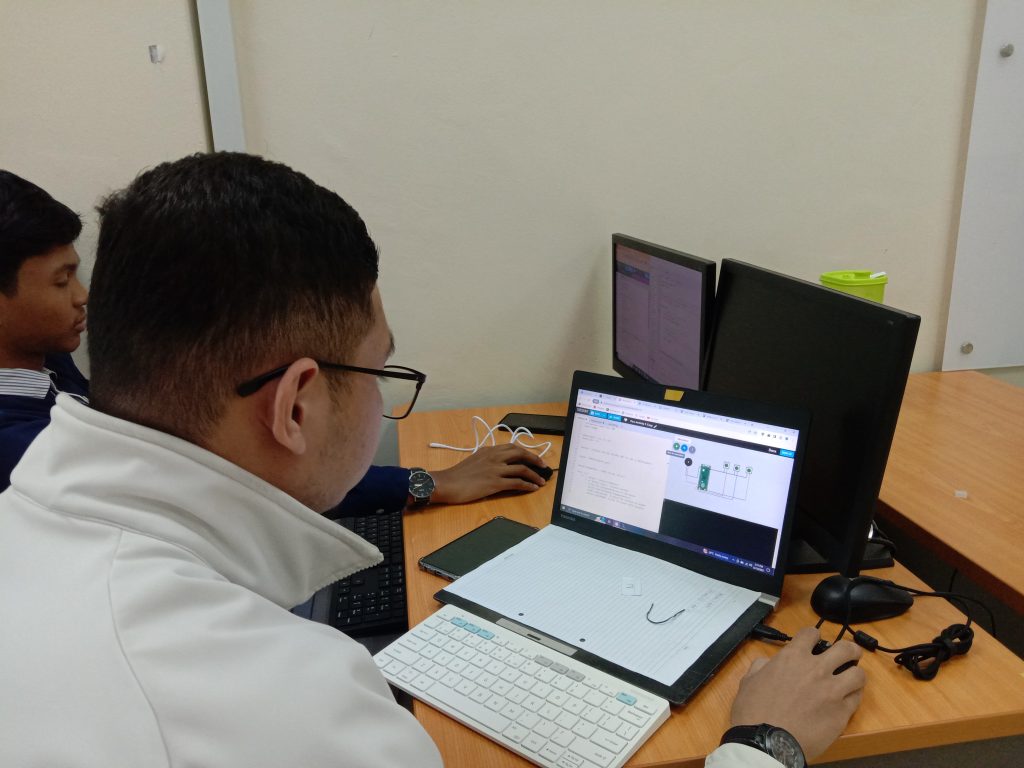
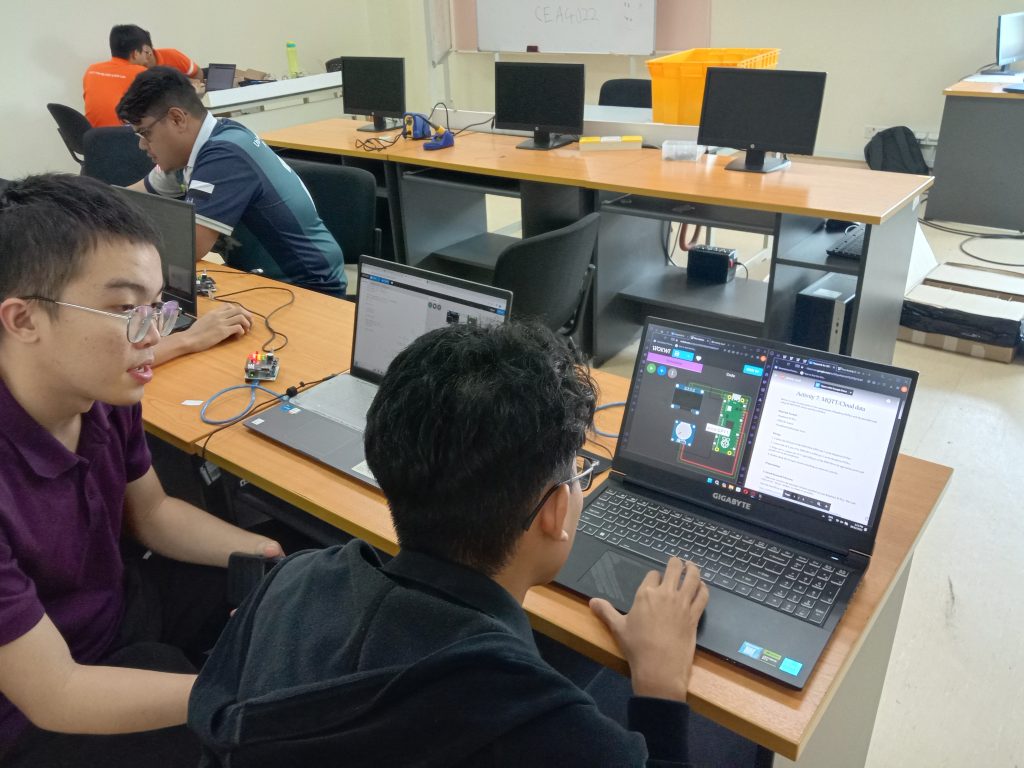
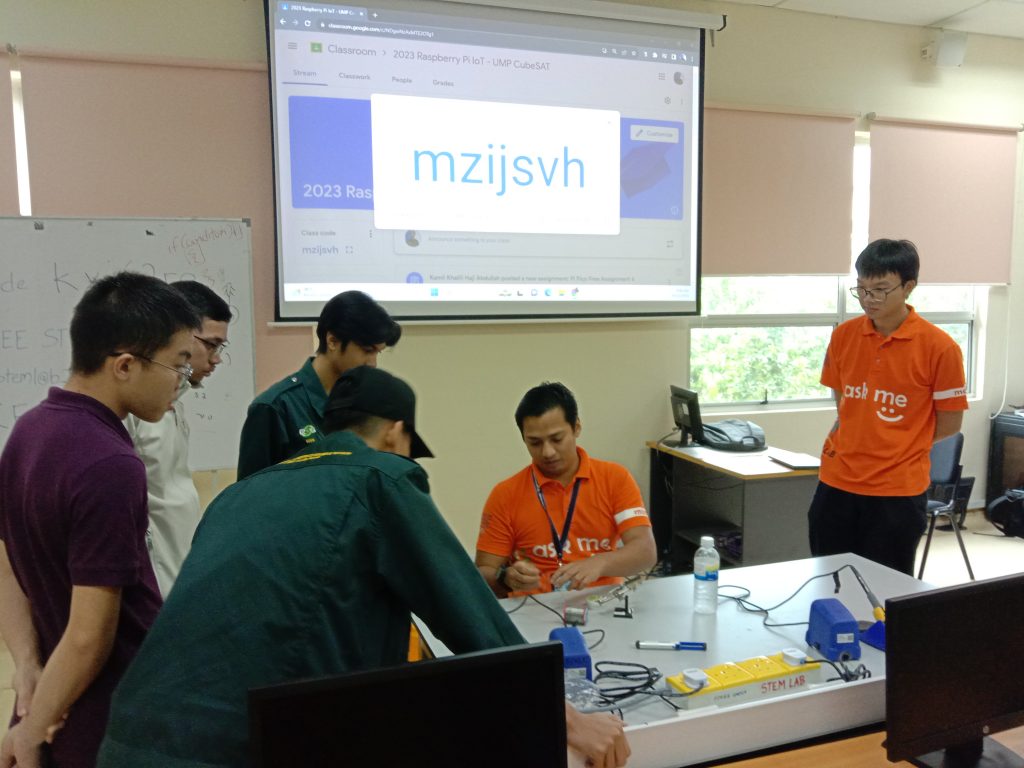

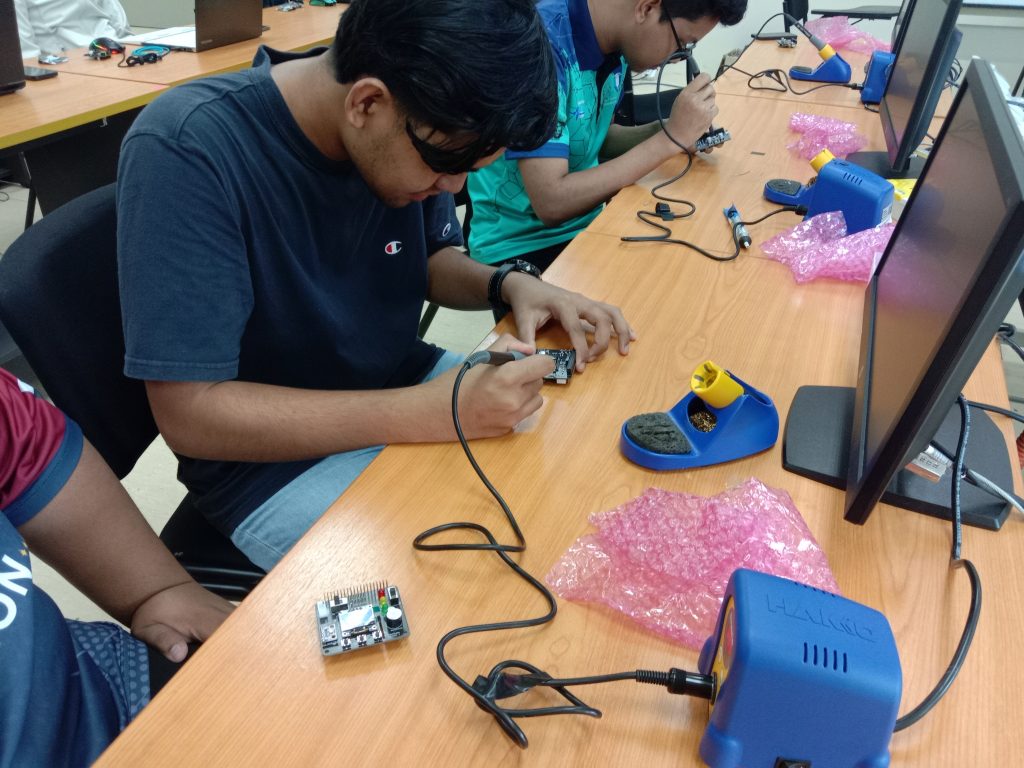

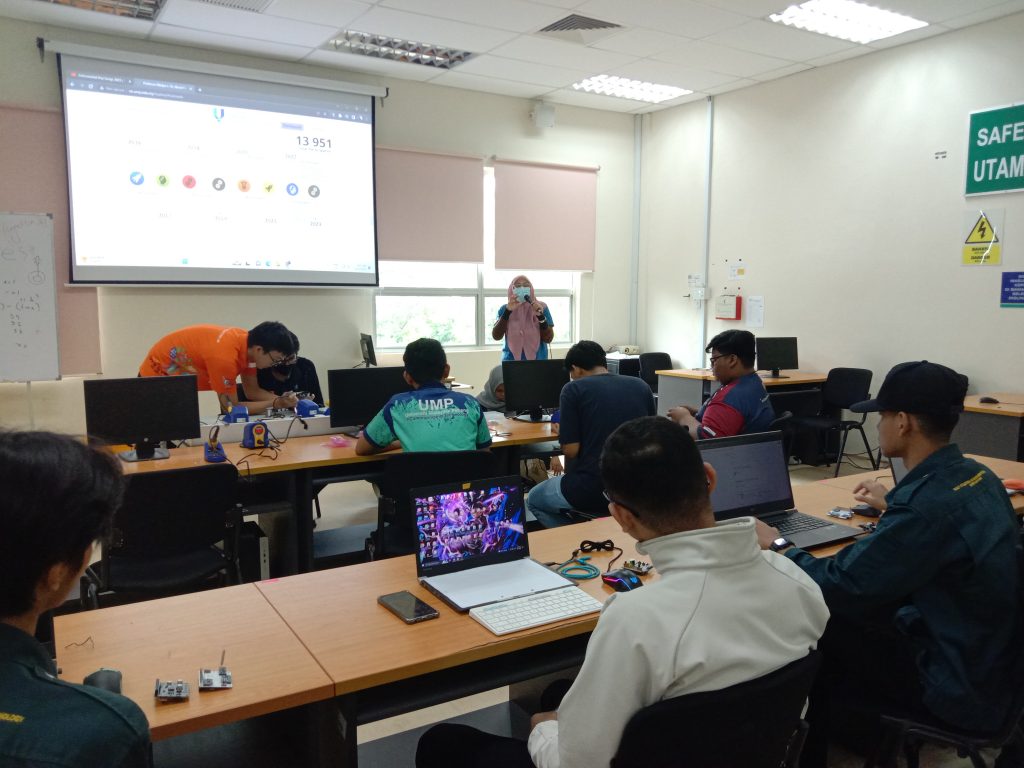
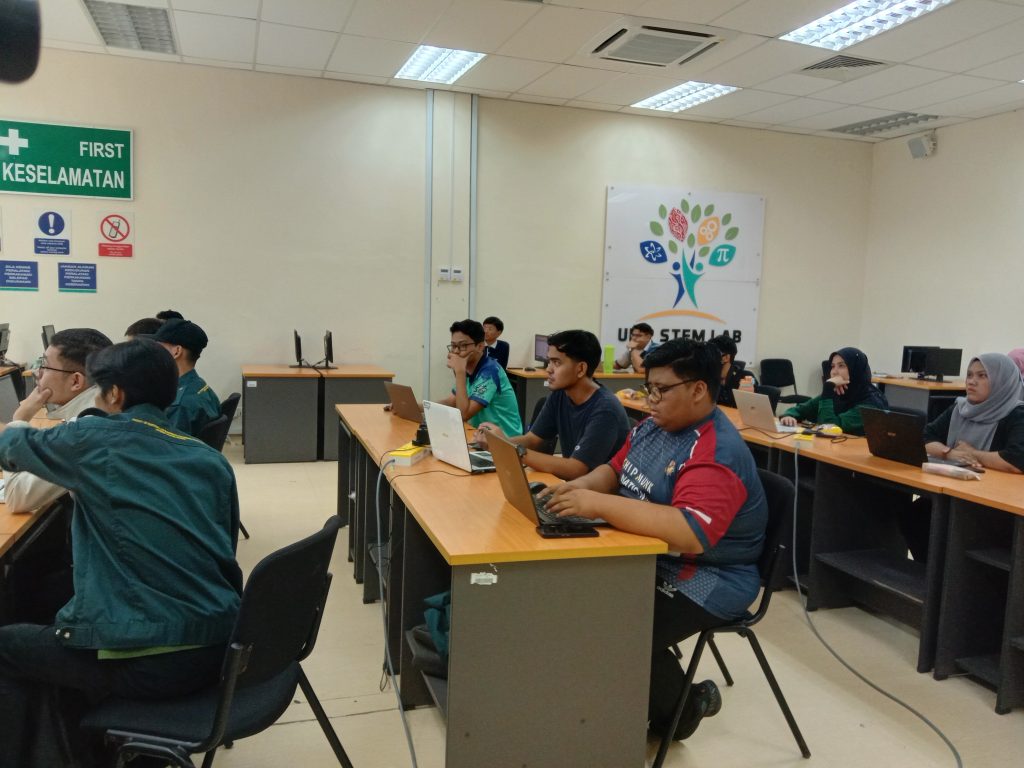
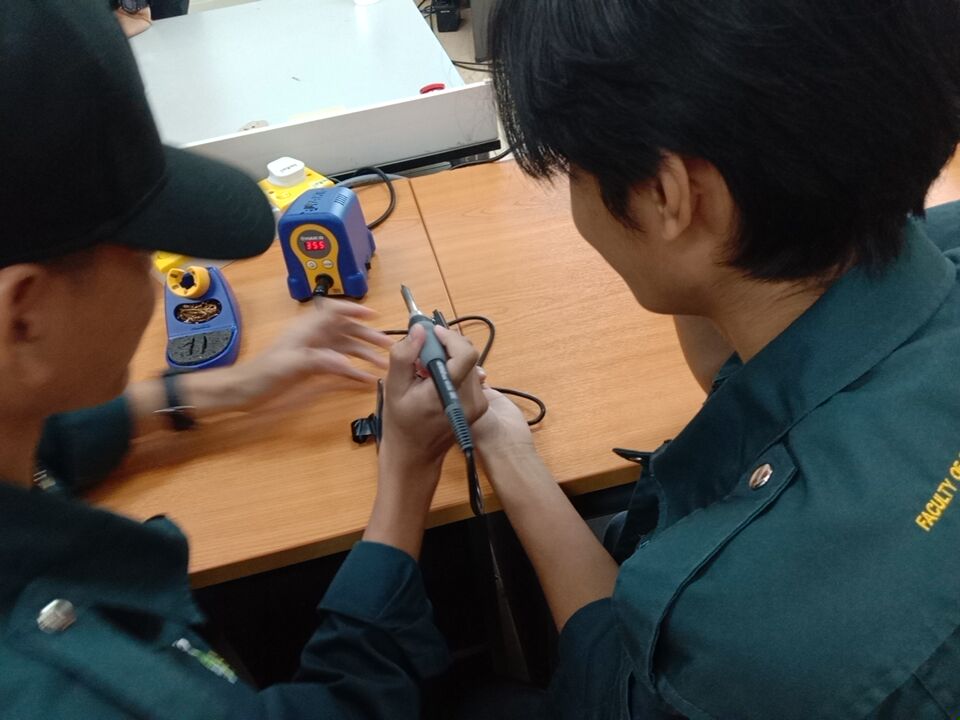
The UMP STEM Lab conducted a Training-the-Trainer (TTT) program for 2024 mentors, with the aimed to provide mentors with the knowledge and skills necessary to effectively incorporate the UMP STEM Cube, MicroPython programming, circuit construction, and data collection techniques into their mentoring activities. The program was designed to empower mentors with hands-on experience, ensuring they could confidently guide students through the exciting realm of STEM education.
The objectives of the program are as follows:-
The session began with an overview presentation on the UMP STEM Cube, highlighting its role in STEM education. Mentors engaged in hands-on exploration of the physical components of the Cube, gaining insights into its functionalities. A comprehensive MicroPython workshop covered essential concepts, syntax, and control structures. Mentors participated in practical exercises, reinforcing their understanding of MicroPython programming through script writing and variable assignments.
In a dedicated lab session, mentors constructed basic circuits using components provided in the UMP STEM Cube kit. The hands-on activities allowed mentors to develop confidence in circuit construction, and they were provided with guidance to troubleshoot common issues. A live demonstration showcased connecting sensors to the UMP STEM Cube via a Raspberry Pi using MicroPython. Practical exercises allowed mentors to collect and analyze data, ensuring they could apply these skills in a mentoring setting.
Towards the end of the session mentors actively engaged in discussions about potential applications and benefits of the UMP STEM Cube in educational settings. Brainstorming sessions encouraged mentors to explore creative ways to integrate the Cube into their mentoring activities.
The discussion focused on practical applications of MicroPython in STEM education. Mentors collaboratively explored potential projects and activities that could be led with students using MicroPython programming. An open discussion allowed mentors to share experiences and challenges faced during the circuit construction session. Collaborative troubleshooting and the sharing of best practices contributed to a collective understanding of effective circuit construction teaching strategies.
The session concluded with brainstorming ideas for integrating the UMP STEM Cube, MicroPython, and sensor data into future mentorship activities. Mentors shared insights on how they planned to incorporate these technologies into their teaching strategies.
The UMP STEM Lab TTT for 2024 Mentorship program successfully achieved its objectives of introducing mentors to the UMP STEM Cube, imparting MicroPython programming skills, enhancing circuit construction abilities, and enabling mentors to collect and analyze data using sensors and Raspberry Pi. The program fostered a community of mentors well-equipped to inspire and guide students in the realms of STEM education. The hands-on and collaborative nature of the training ensured that mentors could confidently implement their newfound knowledge in real-world mentoring scenarios. The TTT program serves as a foundation for mentors to lead the next generation of STEM enthusiasts with enthusiasm and expertise.

This week, my internet TV algorithm guided me to the captivating world of “Chevalier de Saint-Georges,” and from the very outset, I was enthralled. The first ten minutes of the film were nothing short of spectacular, featuring an awe-inspiring scene where Joseph Bologne and Mozart engaged in a mesmerizing one-on-one musical duel on stage.
The heart of Chevalier lies not only in its historical narrative but in its ability to forge a deep emotional connection with the audience. Personally, I felt that the film’s strength becomes most palpable when Joseph Bologne, portrayed with conviction, claims and realizes his power to captivate and unite the masses through his singular medium – music.
As the storyline unfolds, we witness Joseph’s journey not just as a composer and virtuoso violinist but as a man who discovers the transformative potential of his art. The film masterfully captures these moments of self-realization, where Joseph, despite facing societal prejudices and constraints, finds solace and strength in his ability to create music that transcends boundaries.
The scenes portraying Joseph’s performances are nothing short of mesmerizing. The camera lingers on the expressions of the audience members, diverse in their backgrounds and circumstances, all united by the enchanting melodies. It’s in these instances that the film truly shines, portraying the universal language of music as a force capable of breaking down barriers, prejudices, and societal norms.
Joseph’s musical journey becomes a metaphor for resilience and triumph over adversity. The realization of his power to connect with and move the masses serves as a powerful reminder of the enduring strength of art in the face of societal challenges. In these moments, the film transcends its historical context, becoming a testament to the timeless and transformative nature of music.
The orchestral crescendo towards the film’s conclusion is not merely a cinematic flourish; it is a symbolic representation of Joseph Bologne’s triumph against the odds. The music becomes a rallying cry, echoing the resilience of a man who used his art not just to compose symphonies but to compose a new narrative for himself in a world that sought to limit his potential.
“Chevalier de Saint-Georges” goes beyond being a historical biopic; it is a celebration of the emancipatory power of music and the indomitable spirit of a man who dared to claim his space in a society that often sought to deny it. Through Joseph Bologne’s personal journey, the film invites the audience to reflect on the transformative power of music and its ability to inspire change, making it a truly unforgettable cinematic experience.