The world is digital, but life is analog..
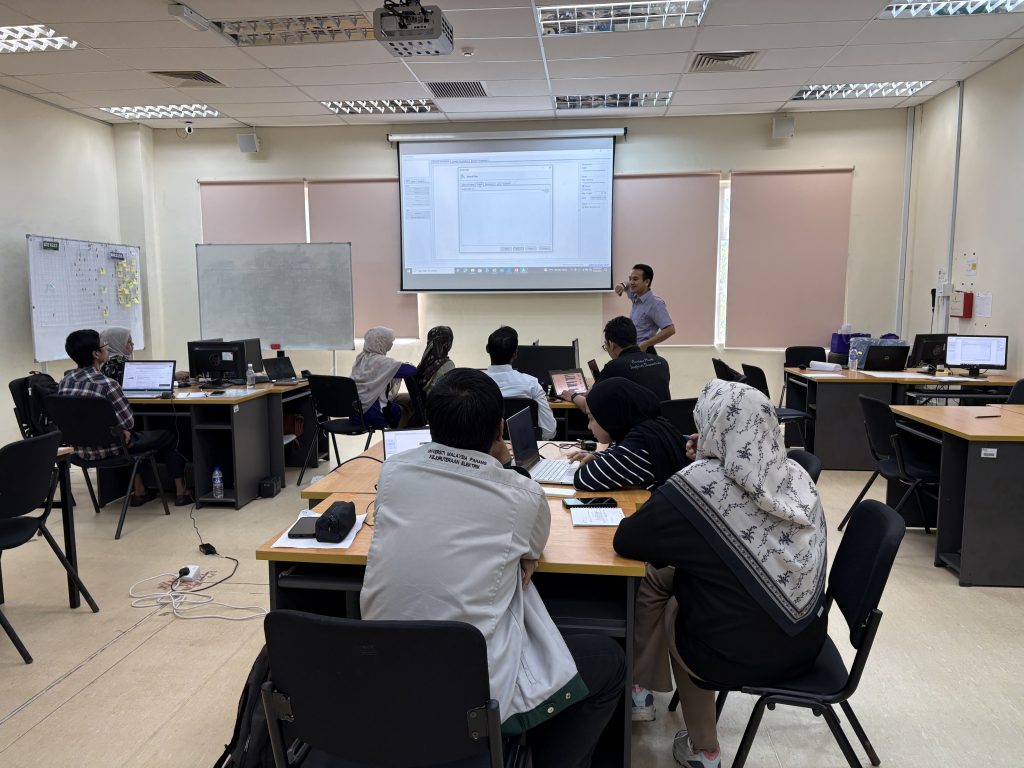
Yesterday, I attended InECCE 2025, a conference organized by the Faculty of Electrical and Electronics Engineering at UMPSA. The session was a meaningful platform to showcase the innovative works of our undergraduate students, particularly their final year projects (FYPs).
In total, five papers were presented, each highlighting a unique research direction that combines embedded systems, sensor integration, microcontrollers, microcomputers, and data analytics. The projects not only reflect strong technical execution but also the students’ growing ability to communicate their findings in a professional setting.
This project focused on developing a circularly polarized antenna tailored for CubeSat communications. Antennas of this type are essential to ensure reliable signal transmission regardless of satellite orientation. The work demonstrated solid grounding in antenna theory, simulation, and hardware prototyping, bridging theory with practical space communication requirements. IEEExplore
A pico-satellite imaging system was designed to perform image recognition at resolutions of 50–75 meters. The project involved integrating cameras with processing units, and developing algorithms for Earth surface feature detection and analysis. Such a system has strong potential for applications in environmental monitoring, agriculture, and disaster assessment. IEEExplore
Using the UMP STEMbot, a two-wheel miniature robot, this project explored human-robot interaction. By programming the robot to respond to commands and adapt to environmental feedback, the students highlighted applications in education, assistive robotics, and interactive learning platforms. The work required programming microcontrollers to interface with sensors, actuators, and wireless communication modules. IEEExplore
This project also utilized the STEMbot, focusing on building a navigation system for autonomous mobility. By integrating infrared, ultrasonic, and IMU sensors, students enabled the robot to avoid obstacles, follow paths, and optimize its movement. The project served as a practical example of applying control systems, embedded programming, and robotics algorithms in real-world scenarios. IEEExplore
In this work, a data acquisition and analytics system was designed for a pico-satellite, the STEM Cube. The system collected environmental parameters (e.g., temperature, humidity, radiation levels), stored them in a database, and processed the data for visualization and decision-making. This project required students to master both hardware sensor integration and software development for analytics and visualization. IEEExplore
It has always been a practice in UMPSA STEM Lab’s project supervision to develop a tangible projects (involves hardware – circuit design and development), simulation and analysis, as well as the presentation and paper-writing skills. Producing technical hardware (embedded systems, robots, satellites) is one challenge; communicating the work through IEEE-style papers and oral presentations is another. Both are equally critical in preparing students for industry and academic research.
That is why I emphasize to my students:
Conferences like InECCE 2025 in Kuantan provide exactly this type of exposure, bridging classroom learning with professional dissemination.
I look forward to bringing my current and future FYP / SDP / URP / PG students to similar conferences, providing them opportunities not only to engage in project-based learning but also to present and publish their work. Such experiences shape them into well-rounded engineers who can both design systems and communicate ideas effectively to wider communities.





iFuture @ UMPSA 2025 – TVET, Innovation & Future Leadership: From Ideas to Impact
https://www.facebook.com/share/v/18pGsW5jr9/


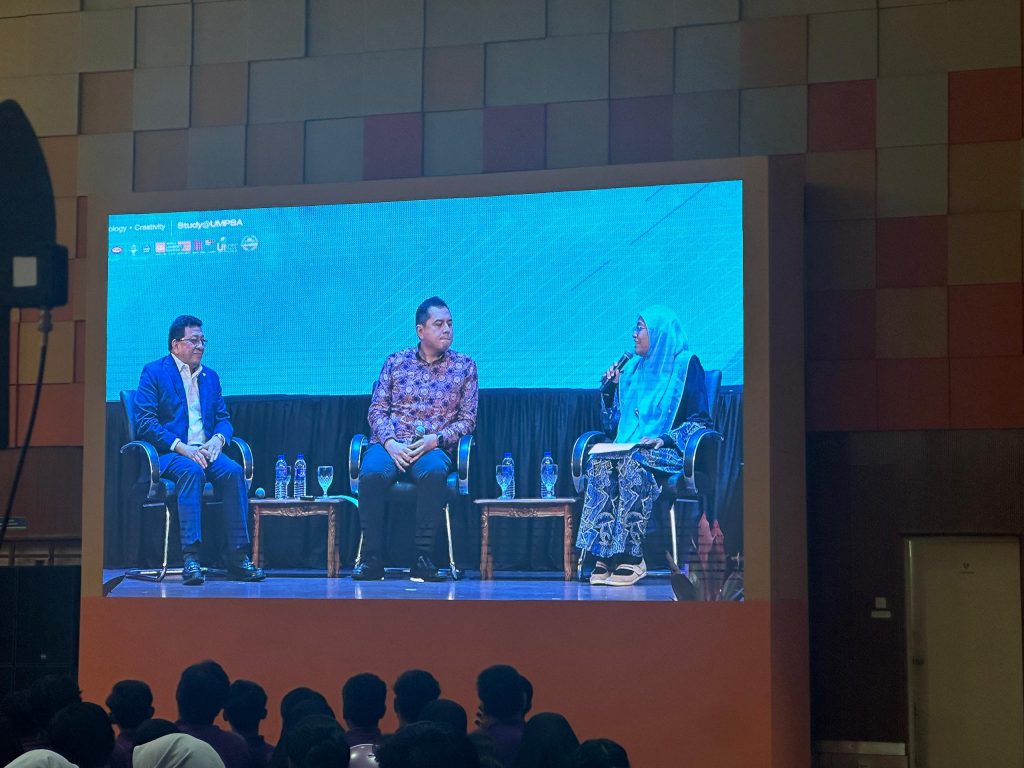
Today, I had the honour of moderating the iFuture @ UMPSA 2025 Forum, aimed to explore how TVET (Technical and Vocational Education and Training), innovation, and youth leadership can converge to build a more resilient and future-ready Malaysia.
We were joined by two distinguished leaders:
We began the session with a light and personal question to the panelists:
“When you were 10 years old, what did you dream of becoming?”
It’s always humbling to hear that even prominent leaders once had childhood dreams as simple as becoming a pilot or a firefighter. It reminds our youth that success starts from humble beginnings—and dreams are valid at every age.
Round 1: Leadership Journeys
To Datuk Ir. Megat – How did you rise to lead TNB? What values or turning points shaped your journey?”
To Dato’ Nizar – What inspired your entry into public service, and how do you view youth’s role in shaping Malaysia’s future?”
Both speakers highlighted the importance of values, mentorship, and community. Leadership is not born overnight. It’s a journey of learning, often shaped by hardship. As a moderator, I truly resonated with the message that real leaders are forged through lived experience and a consistent drive to contribute meaningfully.
Round 2: Perspectives from Industry & Government
To Datuk Ir. Megat – How does TNB view the importance of TVET and innovation in developing a future-ready workforce?”
To Dato’ Sri Mohd Nizar – What is the state government doing to bridge the gap between TVET institutions and industry demands?”
This segment affirmed the need for policy-industry-academia alignment. There is strong intent on both sides—but more platforms like this are needed to translate intent into action. A big takeaway was how TVET is no longer an “alternative” path—it is a primary driver of economic resilience.
Round 3: Challenges & Strategies in TVET and Youth Innovation
To Datuk Ir. Megat – What are the key challenges in hiring industry-ready TVET graduates, and how is TNB addressing them?
To Dato’ Sri Mohd Nizar – What are some state initiatives to empower innovation among youth, particularly in TVET?
This was a powerful round. We discussed gaps in soft skills, adaptability, and real-world exposure. But more importantly, we heard concrete solutions: apprenticeships, innovation grants, and integrated learning pathways. I personally believe that innovation must not be limited to tech—it includes tinkering, problem-solving, and thinking differently.
Round 4: Vision & Collaboration for the Future
To Datuk Ir. Megat – Is TNB open to deeper collaboration with universities like UMPSA in leadership and innovation training?”
To Dato’ Nizar – What are your hopes for TVET students, and how can the state support them?”
This round was particularly close to my heart. As an educator and innovator, I’ve seen that leaders are not just problem-solvers—they are full of ideas. Whether those ideas are big innovations or small tweaks in the classroom, the ability to think, question, and act is what separates a passive learner from a future leader.
And that kind of thinking requires exposure, hardship, and opportunities to build skills—in every direction.
Closing Reflections – A Message to Youth
We closed with this question to both panelists:
“What is your message to Malaysian and global youth as they navigate a future shaped by change and technology?”
Their answers were sincere and empowering—urging youth to stay curious, keep learning, and collaborate across boundaries.
I couldn’t agree more. If we want a generation that leads with courage and ideas, we must keep creating opportunities for them to explore, tinker, build, and fail safely.
I believe Leadership is not a position—it’s a practice =)
And at its core, leadership is the ability to generate ideas and act on them.
Whether you’re building a robot, writing code, or designing a simple classroom solution—those acts of creation are acts of leadership. My hope is that every student who joined us today leaves knowing that their voice, their skills, and their ideas matter.
Let us continue to support them—through conversations like these, and more importantly, through action.